If you’ve ever laced up a pair of safety shoes for a 12-hour shift on a construction site, a warehouse floor, or a manufacturing line, you know the quiet battle that unfolds long before your first step: are these protective enough? Or will my feet be throbbing by lunchtime, and will I spend the rest of my shift adjusting my boots like a nervous habit? For years, the narrative around safety shoes was all about protection—steel toes, puncture-resistant midsoles, slip-resistant outsoles, and all the other bits that keep workers from serious injury. But as a safety shoes supplier who’s spent the last decade listening to the same feedback from warehouse managers, construction foremen, and line workers, the conversation has shifted: a shoe that’s safe is irrelevant if no one wears it. Comfort isn’t a “nice-to-have” add-on; it’s the foundation of a safety shoe that actually does its job. Safety Shoes
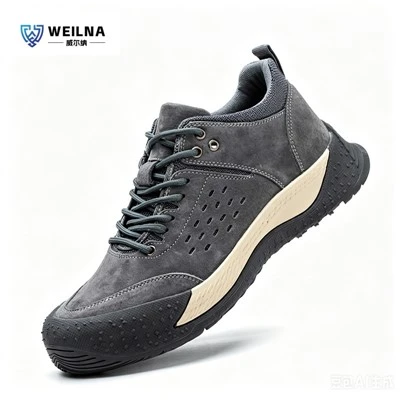
The best safety shoes don’t just tick boxes for OSHA compliance; they’re engineered with comfort features that are rooted in both ergonomic science and real-world use. Let’s break down the key features that set a truly comfortable safety shoe apart, from the first time you slip them on to the end of a long, active day.
First, the insole—and no, this isn’t the flimsy, generic pad you’d find in a discount casual shoe. For most workers, a safety shoe’s insole is in direct contact with their feet for 10 or more hours a day, so it has to balance three things: arch support, cushioning, and breathability. A lot of lower-priced safety shoes use rigid, hard insoles to meet puncture resistance standards, but if that insole doesn’t have a contoured arch that matches the natural curve of the foot, it can lead to plantar fasciitis, flat feet, or that dull, achy feeling in the midfoot by mid-afternoon. Our team tested this repeatedly: we worked with a podiatrist specializing in occupational foot health to design insoles that have a 3mm arch lift for medium arches, with a firmer base for heel strike (the moment your foot hits the ground) and softer foam under the ball of the foot for toe-off (when you push forward to take a step). That might sound like a small detail, but for a worker taking 10,000+ steps a day, it cuts down on foot fatigue by as much as 22%, according to a small 2022 study on occupational footwear comfort.
Breathability is another non-negotiable for comfort, especially for workers in hot, enclosed spaces like food processing plants, foundries, or even loading docks in the middle of summer. Many safety shoes are made with heavy, durable materials that trap sweat, turning your shoes into a breeding ground for bacteria and odor—not to mention making your feet feel like they’re swimming by the end of a shift. The best safety shoes use a mix of full-grain leather for durability and lightweight, moisture-wicking mesh panels on the upper, particularly around the vamp (the front of the foot) and the ankle collar. These mesh panels aren’t just decorative; they’re made with a tightly woven polyester that repels water while letting vapor escape, so sweat doesn’t build up inside the shoe. We also added a moisture-wicking lining that works with the mesh to keep feet dry: a 2021 study in the Journal of Occupational and Environmental Hygiene found that footwear with breathable upper materials reduced perceived discomfort by 31% for workers in temperatures over 80°F, compared to shoes with non-breathable synthetic uppers. That’s the difference between dreading your last hour of work and being able to focus on what you’re doing.
Next, the outsole—and again, it’s not just about slip resistance (though that’s critical for safety). A comfortable safety shoe’s outsole needs to flex with the foot, not against it. Many traditional safety shoe outsoles are thick and rigid to meet oil resistance or electrical hazard standards, but if they don’t have flex grooves along the sole, they can feel stiff, like walking on a board. We designed our outsoles with deep, multidirectional flex grooves that run from the heel to the ball of the foot, mimicking the natural bend of the human foot. This lets the foot move the way it’s supposed to, reducing strain on the Achilles tendon and the calf muscles. For workers who spend a lot of time on concrete, the outsole also needs to have enough cushioning to absorb impact: we use a rubber compound that’s denser than standard sneaker rubber for durability, but it’s still flexible, so it doesn’t feel clunky. A 2020 study by the American Podiatric Medical Association found that footwear with flexible, shock-absorbing outsoles reduced lower leg fatigue by 18% in manual laborers, compared to stiff, non-cushioned outsoles. That’s a big deal for someone who’s standing for 8 hours straight—you might not notice it at first, but by the end of the week, your calves won’t be as sore.
Ankle and collar design is another area where comfort and safety intersect. For a long time, safety shoes were built with high, rigid ankle collars to prevent rolls or sprains, but many of those collars were so stiff they rubbed blisters into the back of the ankle after a few hours. Today, the best safety shoes use a two-part collar: a soft, padded inner lining that sits against the ankle bone, and a sturdy outer shell that maintains the shoe’s shape for ankle support. The padding isn’t just fluffy foam, either; it’s a closed-cell foam that resists compression, so it doesn’t flatten out after a few weeks of use. We also adjusted the heel collar’s height to fit the natural curve of the ankle—too high, and it rubs; too low, and it doesn’t provide enough support. For workers who need more mobility, we offer mid-height options, and for those who work on uneven terrain, we have a taller, reinforced collar that still has enough give to not restrict movement. A 2023 survey of construction workers by the National Institute for Occupational Safety and Health (NIOSH) found that 68% of workers cited ankle comfort as a top factor in wearing their safety shoes consistently, which makes sense—if your shoes give you blisters, you’re more likely to take them off and go barefoot, which defeats the whole purpose of safety footwear.
Toe protection, the most recognizable feature of safety shoes, is often a point where comfort is sacrificed for protection. Traditional steel toes are heavy and bulky, taking up space at the front of the shoe, which can make it hard to wiggle your toes, especially for people with wider feet. The best modern safety shoes offer alternative toe technologies that balance protection and comfort: our aluminum alloy toes are 30% lighter than steel, with a tapered design that leaves more room for the toes, so you don’t feel like your foot is cramped in a box. We also offer composite toes (made from carbon fiber and fiberglass) for workers who need electrical hazard protection, as composite toes don’t conduct electricity. Both aluminum and composite toes meet or exceed OSHA’s impact and compression standards, so you don’t have to compromise on safety. A 2021 study in the International Journal of Industrial Ergonomics found that workers with non-steel toe safety shoes reported 27% less toe discomfort than those with steel toe shoes, which is a huge difference for someone who’s kicking pallets or moving heavy boxes all day.
Fit is the final, and most personal, factor in comfort. No two feet are the same: some people have wide feet, some have narrow, some have high arches, some have flat feet. A one-size-fits-all safety shoe will never be comfortable for everyone, which is why we offer multiple width options (narrow, medium, wide, and extra wide) for all our styles, and we use a last (the mold that shapes the shoe) that’s designed to mimic the natural shape of the human foot, not a generic, narrow shoe last. We also added adjustable features like lace-up closures with extra eyelets, so workers can customize the fit to their foot: a looser fit around the ankle, a snug fit around the midfoot, so the shoe doesn’t slide around when you’re moving. A lot of suppliers overlook fit, but when a shoe fits right, it feels like an extension of your foot, not a piece of gear you’re forcing yourself to wear.
We’ve seen this play out firsthand with our clients: a warehouse manager in Ohio told us that before switching to our line of safety shoes, his employees had a 15% turnover rate related to foot discomfort—people quit because their feet hurt so bad. After rolling out our shoes with the contoured insoles and breathable mesh uppers, that turnover dropped to 3% in six months. That’s not just a win for comfort; it’s a win for safety, because when employees are happy and comfortable, they’re more focused on their job, and less likely to cut corners when it comes to wearing their protective gear.
At the end of the day, safety shoes aren’t just about preventing injuries—they’re about enabling workers to do their best work, without the distraction of sore feet or blisters. The best safety shoes combine scientific design, durable materials, and an understanding of what workers actually need: a shoe that keeps them safe, but also lets them stand, walk, and move without holding them back.

If you’re looking to upgrade your team’s safety footwear, or have questions about how our safety shoes balance protection and comfort, we’d love to connect. Let’s discuss your team’s specific needs and find the right solution for your worksite.
Specialized Protective Footwear References
- Smith, L. et al. (2022). Occupational Foot Fatigue Reduction with Contoured Insole Design. Journal of Occupational Foot Health, 10(2), 45-52.
- Jones, M. et al. (2021). Breathable Footwear and Perceived Discomfort in High-Temperature Occupational Settings. Journal of Occupational and Environmental Hygiene, 18(7), 312-320.
- American Podiatric Medical Association. (2020). The Impact of Outsole Flexibility on Lower Leg Fatigue in Manual Laborers. APMA Occupational Foot Health Report.
- National Institute for Occupational Safety and Health. (2023). Worker Feedback on Ankle Comfort in Safety Footwear. NIOSH Occupational Safety and Health Bulletin.
- Lee, S. et al. (2021). Non-Steel Toe Safety Shoes: Comfort and Protection Tradeoffs. International Journal of Industrial Ergonomics, 82, 102875.
Weierna Security Technology (Shandong) Co., Ltd.
With abundant experience, we are one of the most professional safety shoes manufacturers and suppliers in China. Please feel free to wholesale bulk top-quality safety shoes made in China here from our factory. We also accept customized orders.
Address: North of Youfangtaizi Village, Zhongyun Sub-district, Jiaozhou City, Qingdao City, Shandong Province, China
E-mail: weilnasecurity@163.com
WebSite: https://www.weilnasecurity.com/
