Hey there, fellow converter, printer, and coating specialist! If you’ve ever found yourself staring down a high-viscosity fluid — think thick adhesives, heavy screen-printing inks, or those ultra-viscous UV curables — wondering if your existing micro gravure rolls can even handle the mess, you’re not alone. As a micro gravure roll supplier who’s fielded this exact question a hundred times a week, I’m here to break this down straight: short answer? Yes, they can — but only if you get a few key details right. No fancy lab jargon, no corporate fluff, just what we’ve learned on the floor from working with manufacturers every single day. Micro Gravure Roll
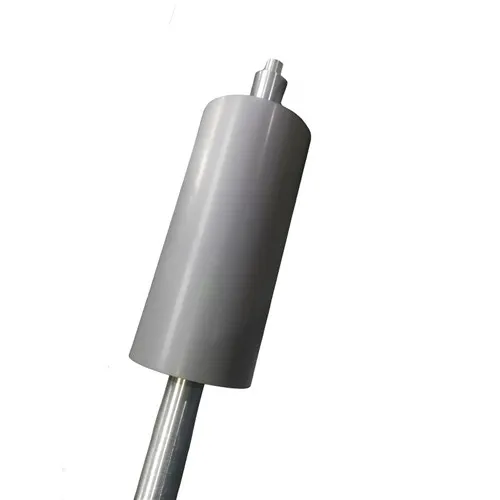
First, let’s get the basics out of the way, because “high viscosity” means way more than just “thick.” I’ve had engineers come in saying their ink is “super thick” and it turns out it’s just a standard 10,000 cP, while another guy swears his is heavy at 50,000 cP. Viscosity is measured in centipoise (cP), and micro gravure systems were originally built for low to mid-viscosity fluids (50–10,000 cP) — perfect for thin inks, coatings, and releases. But modern manufacturing demands more: battery electrodes, thick adhesive tapes, high-end decorative laminates — all need fluids way above that 10k cP mark. So can micro gravure rolls keep up? Let’s talk about the parts that actually make this work.
The biggest myth we see online is that micro gravure rolls can’t touch high-viscosity stuff because the cells will just clog. That’s not entirely wrong, but it’s not the whole story. Standard micro gravure rolls have tiny, shallow cells (usually 5–50 microns deep) to meter precise thin layers. When you’re working with a thick fluid, those small cells have trouble pulling the fluid into the recesses — air gets trapped, the fluid’s surface tension fights back, and suddenly you’re getting streaks, uneven coatings, or zero transfer. But here’s the thing: we don’t just use standard rolls for high viscosity. We modify the cell geometry. For fluids above 10,000 cP, we switch to slightly deeper cells (60–150 microns) with wider openings. The extra volume gives the fluid space to flow into the cell, and the wider entrances cut down on surface tension resistance. We’re not talking giant cells here — we still keep the cell density (usually 100–300 cells per cm) the same to maintain the meter accuracy, which is make or break for applications like medical device coatings or printed electronics where even a 10% thickness error ruins the part.
Then there’s the roll’s surface, which people sleep on. If your micro gravure roll has a standard chrome plating, high-viscosity fluids will stick to the land areas between cells instead of staying in the cells. That means excess fluid gets transferred to the substrate, and you’re back to messy, inconsistent coats. We use two main upgrades here for high-viscosity fluids: hard diamond-like carbon (DLC) coatings or polished electroless nickel with PTFE impregnation. The DLC is super smooth and extremely hard (it resists scratching from thick fillers in things like ceramic inks), while the PTFE coating lowers surface energy so the fluid doesn’t cling to the lands. We tested this last quarter with a customer doing thick adhesive coatings; they went from a 12% reject rate with their old chrome rolls to less than 2% with our modified high-viscosity micro gravure rolls. That’s the kind of win that makes this job worth it.
But wait — micro gravure isn’t just the roll. You’ve got to match the roll to the rest of your system, and that’s where most guys mess up. For high-viscosity fluids, the gap between the micro gravure roll and the anilox roll (or, if it’s direct gravure, the substrate) is way more critical. If the gap’s too tight, the thick fluid can’t spread between the rolls, so you get partial cell filling. If it’s too loose, you get excess fluid that smears. We recommend a gap that’s 10–15% wider than what you’d use for a 5,000 cP fluid — but only after you’ve set the roll pressure properly. Too much pressure, and you’ll crush the cells; too little, and the roll won’t “wipe” the excess fluid off the surface. We always tell customers to test the gap with a roll that’s been run for 10–15 minutes — fresh rolls can have tight gaps that open up a bit once the coating stabilizes.
Another big factor: fluid preparation. I can’t tell you how many times a customer brings us a high-viscosity ink that’s been sitting on the shelf for a week, no stirring, with settled pigments. If the solids are uneven, they’ll get stuck in the micro gravure cells, leading to clogging. We always suggest a gentle, low-shear stirring system for high-viscosity fluids — high shear will break down the particles, change the viscosity, and ruin your coat. Also, filtering the fluid through a 50–100 micron filter before it goes onto the roll will remove any big chunks that could jam the cells. We had a battery component maker who was getting constant cell clogs until they started filtering their electrode slurry; their roll lasted 3x longer, and their coating uniformity went from 85% to 98%. That’s a small step that makes a huge difference.
Now, what about the limits? No, we can’t use micro gravure rolls for fluids that are like peanut butter (we’re talking 500,000 cP and up — think heavy paste compounds). For those, we use direct coating systems like roll coating instead. But for almost every high-viscosity fluid that’s used in modern manufacturing — 10k to 300k cP — we can modify micro gravure rolls to work. We recently did a project with a flexible packaging company that uses a 150,000 cP water-based adhesive for lamination; their old system was using a custom roll with 20 micron cells, and they were getting 20% waste from uneven coats. We swapped them to a roll with 120 micron cells, DLC coating, and adjusted their system gap, and they cut waste to 3% while speeding up their line by 15%. That’s the kind of result that makes all the custom roll tweaks worth it.
I also want to address a common fear: roll lifespan. A lot of people think modifying micro gravure rolls for high viscosity will make them wear out faster. If you’re using cheap chrome rolls, yeah, the thick fluids and high pressure will scratch the surface, and the cells will wear down in a few months. But if you use a DLC or PTFE-impregnated coating, those rolls last 2–3x longer than standard rolls, even with high-viscosity fluids. We track this with our customers; the average lifespan for a high-viscosity modified roll is 12–18 months, compared to 4–6 months for a standard roll with the same fluid. That means less downtime, less roll replacement cost, and more consistent production — which is the bottom line for everyone.
Wait, let’s talk about a real example that’s top of mind. A client in the medical device space was coating catheters with a 80,000 cP lubricious silicone. They’d been using a knife-over-edge coating system, but it was leaving streaks and wasting 25% of the expensive silicone. They reached out because they heard we do custom micro gravure rolls. We designed a roll with 80 micron cells, polished PTFE coating, and worked with them to adjust their line’s speed and gap. The first trial run? 99% uniformity, waste dropped to 4%, and they now use the same roll for over a year without reconditioning. That’s not theory — that’s what happens when you pair a modified roll with the right system setup.
So, to wrap this up: Can micro gravure rolls be used for high-viscosity fluids? Absolutely — but not the off-the-shelf roll you bought last year. The key is customizing the roll’s cell size, surface coating, and then making a few small tweaks to your coating system (gap, pressure, fluid prep). It’s not a one-size-fits-all, but that’s what we do as a micro gravure roll supplier — we don’t just sell rolls, we work with you to figure out the right setup for your specific fluid and application.
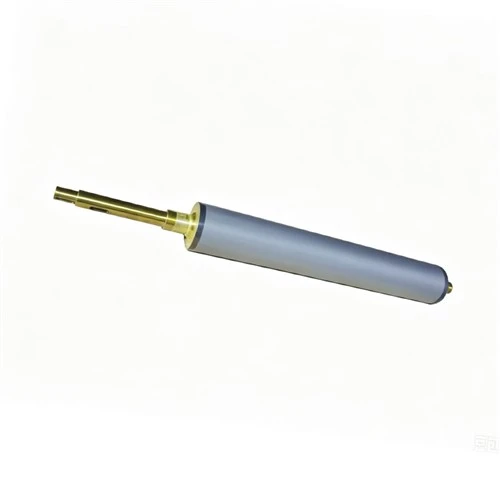
If you’re currently fighting with streaky coats, clogged rolls, or wasted high-viscosity materials, let’s talk. We’ve helped dozens of manufacturers fix this exact problem, and we can design a micro gravure roll that fits your line, your fluid, and your production goals. No guesswork, no sales pitch fluff — just real solutions for real coating challenges.
Micro Gravure Roll References:
- Micro Gravure Coating: Fundamentals and Applications, 2021, Elsevier
- High-Viscosity Fluid Behavior in Gravure Cells, Journal of Coating Technology, 2019
- Surface Coating Effects on Gravure Roll Performance, Industrial Coating Magazine, 2022
Kunshan Hanhan Co., Ltd.
We’re well-known as one of the leading micro gravure roll manufacturers and suppliers in China. We warmly welcome you to buy high quality micro gravure roll made in China here from our factory. If you have any enquiry about cooperation, please feel free to email us.
Address: No. 1093, B Zone, No. 2 Xugongqiao Rd, Huaqiao Town, Kunshan City, Suzhou, Jiangsu, China
E-mail: info@kshhroller.com
WebSite: https://www.kshh-roller.com/
