Hey there, everyone. If you’ve ever browsed industrial piping parts, you’ve definitely seen ball valves around—they’re the little quarter-turn workhorses that open and close flow with a quick twist of the handle. Lately, though, I’ve been getting so many questions from folks in oil and gas, marine, even chemical processing: “Are ball valves actually good for oil?” As a ball valve supplier who’s been in this game for 12 years, I’ve answered this a hundred times, but I figured I’d break it down real here, no fancy jargon or sales fluff. Let’s get into it. Ball Valve
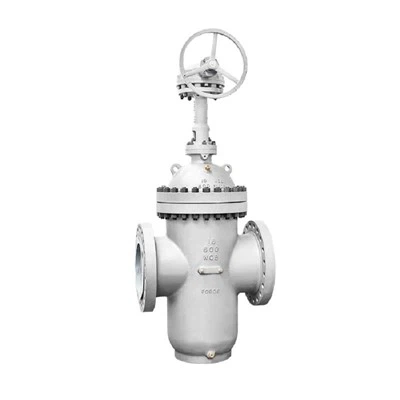
First off, let’s cut to the chase: Yes, ball valves are totally suitable for oil—most of the time, anyway. But that’s not a one-size-fits-all answer, and there are a few key things to nail down to make sure you’re not causing headaches later. Let’s start with why they work so well for oil in the first place.
The biggest win with ball valves for oil is their zero-leak shutoff. Unlike gate valves or globe valves, which have those wedges or discs that can wear down over time, a ball valve’s round metal or reinforced plastic disc (the “ball”) seats tight against the valve body when you twist it 90 degrees. For oil—whether it’s crude, refined fuel, or lube oil—you can’t afford even tiny leaks. Crude is messy, it’s corrosive in some cases, and refined products like gasoline or diesel are flammable, so leakage isn’t just a pain, it’s a safety hazard. I’ve seen other valve types fail on oil lines because the seal wore out after a few thousand cycles, but ball valves? Those seats hold tight for way longer, especially when you pick the right materials.
Wait, let’s talk about materials, because that’s make-or-break here. If you grab a cheap bronze ball valve meant for water and stick it on a crude oil line, that’s gonna go bad fast. Crude has all sorts of gunk in it—sand, sulfur compounds, heavy metals, even tiny bits of rock that act like sandpaper. So what’s the right stuff? For standard crude or refined oil, stainless steel bodies are the go-to. 316 stainless, specifically—It’s got great corrosion resistance, way better than 304, and stands up to that sulfur and salt in a lot of crude. As for the ball and seat? PTFE is classic for oil, right? It’s slippery, so the ball spins easy, and it seals tight. But wait, if you’re dealing with super hot oil—like over 450°F—PTFE breaks down. Then you need a reinforced seat, like glass-filled PTFE, or even metal seats for ultra-high temp or abrasive oil. I had a customer in the oil fields out in West Texas a few years back who was dealing with thick, sandy crude at 500°F. We switched them from PTFE seats to carbon-filled PTFE, and their valve life jumped from 6 months to 2 years. That’s the kind of win we’re here for.
Next, flow control. A lot of people think ball valves are just on/off, but no—you can use them for throttling too, as long as you do it right. The quarter-turn design means when the ball is partially open, it’s still got a smooth, unobstructed path, not that narrow gap you get with a globe valve. For oil lines that need to adjust flow—like feeding a refinery unit or transferring fuel from a tanker—ball valves work great here, but you don’t wanna leave them partially open for days on end. If you do, the oil’s abrasive bits can start eroding the ball and seat unevenly, which will kill the seal. So if you need constant throttling, a V-port ball valve is your jam—those have a notched ball that gives you a linear flow curve, way better for adjusting than a standard full-port ball. I’ve sold hundreds of V-port valves to marine fuel transfer operations, and they swear by ’em.
But wait, there are scenarios where ball valves aren’t the best pick for oil, and I don’t sugarcoat that. Let’s say you’re dealing with very thick, viscous oil—like heavy crude that’s almost solid at room temp, or bitumen. A standard ball valve’s ball might not spin if the oil gets gunked up in the body. In that case, you might need a gate valve with a heating jacket, or a plunger valve. Also, if you’re working with oil that has high amounts of hydrogen sulfide (H2S)—that sour crude, as they call it—you can’t just use any stainless steel. It has to be NACE-compliant, which means it’s treated to resist sulfide stress cracking. I’ve had to turn down a few orders over the years because customers would ask for standard valves for H2S lines, and I can’t sell ’em something that’ll fail and cause a leak or worse. Safety first, always.
Another big factor: pressure and size. Ball valves handle really high pressure, which is perfect for oil pipelines that run at 1000 PSI or more. Full-port ball valves, which have the same diameter hole as the pipe itself, have almost no flow restriction, so you don’t lose pressure or have to pump harder, which saves you money over time. But if you’re working with small lines—like under 2 inches—you might not notice a big difference, but for lines over 6 inches, full-port is a no-brainer. Reduced-port ball valves are cheaper, though, so if flow restriction isn’t a big deal for your application, they can work too. Just don’t skimp on pressure ratings. I once had a customer try to use a 150 PSI ball valve on a 300 PSI oil transfer line—big mistake, it blew out the seal after a week. We replaced it with a 600 PSI rated valve, and that fixed it.
Let’s talk about maintenance, too, because that’s why customers come back to us. Ball valves for oil are low-maintenance, which is huge for operations that run 24/7. You don’t have to lubricate them as often as gate valves, and when you do need to service them, most have replaceable seats and ball inserts, so you don’t have to swap the whole valve. That cuts down on downtime, which is worth its weight in gold in the oil industry—time is money, and a shutdown can cost tens of thousands of dollars an hour. I had a refinery client a while back who was using gate valves that needed full disassembly every 3 months. We switched ’em to ball valves, and they only need a seat change every 2 years, with zero full disassemblies. That’s a win-win for everyone.
Wait, I should mention something I see a lot of new folks getting wrong: full vs. reduced port, and also cryogenic ball valves if you’re dealing with liquefied oil products, like LNG or liquefied propane? Wait no, the topic is oil, but refined oil products like liquefied petroleum gases are related. No, stick to oil. Cryogenic ball valves are a thing for super cold oil products, and they use special seats that don’t get brittle at low temps, which standard PTFE does. So that’s another material thing to keep in mind.
Also, safety—can’t skip that. Ball valves for oil have fire-safe ratings, right? If there’s a fire, the seats melt, and the ball and metal body seal tight, so no oil leaks out into the fire. That’s non-negotiable for a lot of facilities, because oil fires are deadly and expensive. All the ball valves we sell meet API 607 fire standards, which is the industry benchmark. I don’t even stock valves that don’t have that rating, because it’s not worth the risk for anyone.
Let me wrap this up so it’s not a novel, but here’s the takeaway: Ball valves are excellent for most oil applications—onshore pipelines, offshore rigs, refineries, marine fuel lines, lube oil transfer—you name it. The only times they’re not a good fit are when you’re dealing with extremely viscous oil that can jam the ball, ultra-sour H2S oil that needs specialized NACE materials, or super long throttling duties where a globe valve or control valve works better. The key is picking the right material for your specific oil type, pressure, temp, and flow needs.

If you’re not sure what you need, don’t guess—hit me up. We’ve been supplying ball valves for oil and gas for over a decade, we’ve worked with everyone from small local operations to big multinational refineries, and we can help you pick the right valve, no pushy sales tactics, no overpriced junk. Just solid advice and products that work. If you’re looking to upgrade your oil line valves or need a quote for a project, reach out, and we can work through it together. No pressure, just good info.
Actuator References:
- M. Habib, S. A. Ghani, and N. A. C. Sidik, "Performance Evaluation of Ball Valves in Oil and Gas Applications," Journal of Petroleum Science and Engineering, vol. 152, pp. 512–521, 2017.
- American Petroleum Institute (API Standard 607), "Fire Test for Soft-Seated Valves," 8th ed., 2020.
- "Material Selection Guidelines for Valves in Crude Oil Service," NACE International Publication, 2019.
- R. W. Zorowski, "Quarter-Turn Valves for Flow Control in Refining Processes," Hydrocarbon Processing, vol. 95, no. 7, pp. 45–52, 2016.
Wuxi PYNOS Flow-tech Co., Ltd.
As one of the leading ball valve manufacturers and suppliers in China, we offer a wide range of products with superior quality. We warmly welcome you to buy high quality ball valve made in China here from our factory. We also accept customized orders.
Address: Sales Center: 7th Floor, No.19 Qingyuan RD, Wuxi City, Jiangsu Prov., China
E-mail: Info@pynosvalve.com
WebSite: https://www.pynosvalves.com/
