If you’ve ever worked in live events, theater, or concert production, you know that stage mechanical equipment isn’t just metal and motors—it’s the backbone of every seamless performance. As a supplier of stage mechanical gear, I’ve spent the last 12 years overseeing transports that go off without a hitch… and more than a few that turned into 2 a.m. rescue missions when someone tried to cut corners on planning. Transporting this stuff isn’t like moving office furniture or even heavy construction equipment. A single misstep can scratch a $15,000 truss, bend a winch housing that’s critical for flying set pieces, or—worse—create a safety hazard that derails an entire tour or show. Today, I’m pulling back the curtain on exactly how we do it right, from our first pre-transport audit to the final handoff at the venue. Let’s dive in. Stage Mechanical Equipment
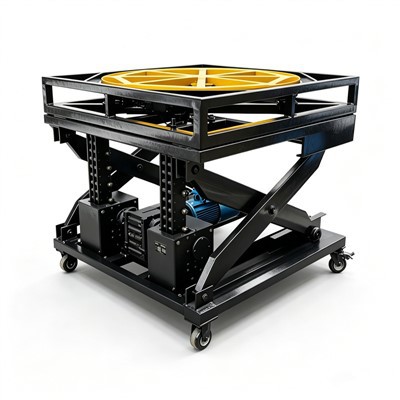
The first rule of stage mechanical transport: you don’t start planning when the truck is 24 hours out. We begin the process 4 to 6 weeks before any move, right around the time a client locks in their show dates and venue details. The very first step is a full equipment audit, and I mean a line-by-line, part-by-part walkthrough with the client’s production manager. I’ve had clients call us panicking because they forgot to include a 30-foot stage lift or a set of motorized batons that fly the overhead props. Missing a core piece here isn’t just an inconvenience—it’s a $50,000 bill to rent last-minute gear at a premium, or worse, a show that can’t open on time. During this audit, we also note the condition of each piece: for example, a winch that’s been used on 20 tours needs extra care, while a brand-new truss can handle a bit more rough handling. We document everything in a shared spreadsheet, so both our team and the client have a clear list of what’s going where, how heavy each part is, and any special handling notes.
Next up is route and vehicle planning, and this is where a lot of smaller transport companies fall short. Stage mechanical equipment is heavy—think 10,000-pound stage lifts, 5,000-pound truss sections, and dozens of small, delicate parts that can’t jostle around in the back of a standard box truck. We don’t use one-size-fits-all trucks here. For large, oversized pieces like stage lifts or full truss arrays, we work with flatbed trailers that have a low deck (called a lowboy) because they can handle heavier loads while staying under height limits that apply on most highways. For smaller, delicate parts like motor control panels or custom rigging hardware, we use enclosed dry vans to protect them from rain, dust, and road debris that can scratch or short out electronics. We also check route restrictions before we even book the truck. Last year, a client of mine tried to save money by booking a standard truck for a 40-foot truss array, only to find that the route they picked had a 12-foot underpass—their truss was 12 feet 6 inches tall when loaded. We had to reroute last minute, adding 3 hours of drive time and an extra $1,800 in fees that could have been avoided with 10 minutes of pre-planning. We also coordinate with state and local transportation authorities if we’re moving loads over a certain weight, usually 80,000 pounds for full truckloads, to get the necessary permits. Skipping permits can result in thousands of dollars in fines and a truck being pulled off the road mid-transport—something no production wants to deal with.
Once we’ve got the truck and route locked in, it’s time for the packing and loading phase, which is where our team really shines. Stage mechanical equipment isn’t uniform, so loading isn’t just piling parts into the truck and strapping them down. We group parts by their destination in the venue—for example, all the backstage rigging goes in the front of the trailer, while the main stage lift parts go in the middle. This saves the venue’s crew hours of unloading time, since they don’t have to dig through every piece to find what they need first. We also use custom padding for every delicate part: motor control panels get custom-cut foam inserts to fit snugly in their crates, winch motors are wrapped in heavy-duty moving blankets and secured to wooden pallets so they don’t shift during transport, and truss sections are padded along their edges to prevent scratches that would ruin their look for the stage. The biggest rule for loading? Weight distribution. We never put all the heavy pieces in the back of the truck, because that can make the trailer fishtail on the highway. Our loaders use a scale system to make sure the front and rear axles of the trailer are balanced within a few hundred pounds of each other—this not only makes the drive safer, but also ensures we comply with axle weight limits, another way to avoid fines. Once everything is loaded, we use a combination of heavy-duty straps, chain binders, and air-ride suspension in our trucks to keep parts stable. Air ride is a game-changer for us; it absorbs most of the bumps from potholes and highway expansion joints, so even the most delicate electronics arrive without a scratch.
Before the truck leaves our warehouse, we do a full pre-departure checklist to make sure nothing is missed. This is a routine I started after a time, early in my career, when we left a set of custom rigging bolts at the warehouse. By the time we realized it, the truck was 2 hours down the road, and we had to send a courier to catch up—costing the client $3,000 in rush fees and making us look unprofessional. Now, our checklist includes everything: verifying that all parts on the audit list are loaded, checking that every strap and binder is tightened to the correct tension, testing that the trailer’s door seals are intact to keep out rain, and even confirming that the driver has a copy of the route, permits, and a detailed inventory list. We also assign a dedicated logistics coordinator who is on call 24/7 during the transport, so if there’s a delay—whether it’s traffic, a flat tire, or a last-minute road closure—we can adjust quickly and keep the client in the loop. No more radio silence for hours; our clients get a text or email update every 4 hours, so they always know where their equipment is.
Once the truck arrives at the venue, the work isn’t done yet. We handle the unloading and setup support too, because even if a piece arrives undamaged, a bad unload can ruin everything. Our crew arrives at the venue 12 to 24 hours before load-in starts, depending on the size of the equipment. For large pieces like stage lifts, we use venue-approved cranes or forklifts (we never bring our own unless the venue doesn’t have the right equipment, because most venues have specific rules about heavy machinery on their floors) to unload and position the parts in the designated storage area backstage. We also do a quick visual inspection of every piece to confirm no damage occurred during transport: checking for dents on truss sections, testing winch motors for any unusual noise, and making sure control panels power on without issues. If a piece is damaged, our on-site techs can often do a quick repair, or we have a spare parts kit that we keep on hand for every transport—another thing we learned from that time we had to fix a scratched truss mid-load-in. We also work closely with the venue’s production crew to make sure we’re unloading in the right order, so they can start setting up the show as soon as we’re done. No one wants to be the company holding up load-in time, so we always stick to the schedule we agreed on weeks in advance.
I know some smaller production companies might be tempted to cut corners here—maybe rent a cheaper truck, skip the permits, or skip the pre-transport audit to save money. But let me tell you, that short-term savings almost always turns into long-term headaches. Last year, we got a call from a regional theater that had tried to transport their own stage lift for a production of Les Misérables. They used a standard box truck, didn’t check the route, and hit a 10-foot underpass on the way to the venue. The lift, which weighs 8,000 pounds, got stuck, and by the time they got it cut free, it was too damaged to use. They had to rent a new lift for $25,000, and they missed 3 days of rehearsals, almost delaying the show’s opening night. That’s the kind of mistake we help our clients avoid by taking every step seriously.
At the end of the day, transporting stage mechanical equipment is about more than moving heavy things from point A to point B. It’s about protecting a production’s schedule, keeping performers and crew safe, and making sure the show goes on as planned. That’s why we don’t cut corners—because we know every piece of gear we move is part of someone’s vision, a show that hundreds, or even thousands, of people are waiting to see.

If you’re planning a tour, theater production, or any event that requires stage mechanical equipment, we’re here to help. We can handle transports of all sizes, from small local shows to national tours, and we’ll work with you every step of the way to make sure your gear arrives on time, undamaged, and ready for setup. Reach out to our team to discuss your transport needs, and let’s make your next event a success.
Stage Mechanical Equipment References
- Live Event Production: The Process of Planning, Design, and Execution, Focal Press, 2021
- American Road and Transportation Builders Association, State Oversize Load Permit Requirements, 2022
- Stage Rigging and Safety Handbook, United Scenic Artists Local 829, 2020
- Heavy Equipment Transport Best Practices, National Association of Industrial and Office Properties, 2019
JIANGSU HONGBO STAGE EQUIPMENT SCIENCE AND TECHNOLOGY CO., LTD.
As one of the most professional stage mechanical equipment manufacturers and suppliers in China, we’re featured by quality products and good price. Please rest assured to wholesale bulk advanced stage mechanical equipment for sale here and get quotation from our factory. Customized orders are welcome.
Address: Dasi Industrial Park, Gaogang District, Taizhou City, Jiangsu Province
E-mail: hongbowutai@gmail.com
WebSite: https://www.hbstageequipment.com/
