If you’ve ever worked in heavy industry, construction, maritime transport, or even large-scale agriculture, you’ve probably encountered a flange link fitting—even if you didn’t know its name. As a supplier of link fittings, I get questions about this component all the time: What is it exactly? How does it work, and why does it matter more than just a regular metal fastener? Let’s break this down, straight from someone who’s spent the better part of a decade sourcing, testing, and providing these parts to teams around the world. Link Fittings
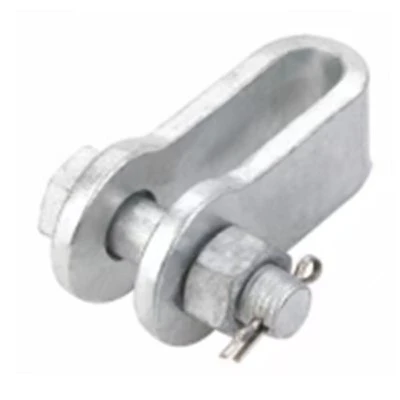
First, let’s get the basic definition right. A flange link fitting is a specialized, one-piece (or sometimes two-piece) metal connector designed to link two or more heavy-duty components together securely, with built-in flange features that distribute stress evenly across the joint. Unlike standard bolts or chain links, which concentrate force at a small point, the flange on these fittings creates a wider, flat surface that sits flush against the parts being connected—whether that’s a section of industrial chain, a trailer hitch, a conveyor system component, or a marine mooring line mount. The link portion is the curved or straight middle section that actually bears the load, while the flange is the flat, outer edge with holes or slots for pins, bolts, or clips to fasten everything in place.
Let’s ground this in a real-world example I saw just last month. A client in the Pacific Northwest runs a salmon-processing plant that uses 50-foot conveyor systems to move crates of fish from washing stations to freezers. Six months ago, they were using standard chain links and hex bolts to connect the conveyor’s steel slats. After a few months of running 12-hour shifts, the bolts were snapping, and the chain links were bending at the point where the bolt passed through. They came to me for a solution, and we recommended replacing those standard links with flange link fittings. The flange spread the weight of the crates and the tension from the conveyor motor across a much larger area, so the bolts didn’t have to hold all the stress alone. After three months of testing, their downtime from broken joints dropped by 70%. That’s not a stat I read in a manual—that’s a real win for a team that relies on their equipment to keep their business running.
So how is a flange link fitting different from similar parts people might confuse it with? Let’s clear up a few common mix-ups. First, it’s not the same as a flange on a pipe. Pipe flanges are designed to connect sections of piping for fluid flow, often with gaskets to prevent leaks. Flange link fittings are structural—they’re for holding physical loads, not sealing fluids. Second, they’re not standard chain links. Standard weldless chain links are thin, uniform, and designed for light to medium loads, while flange link fittings are forged (usually from high-grade carbon steel or alloy steel) to handle extreme tension, impact, and corrosion. Some people also mix them up with clevis links, which have a U-shape and a pin through the open end. Clevis links work for some applications, but their open design makes them less secure for heavy dynamic loads like trailer towing or conveyor tension, where the link could slip if the pin comes loose. Flange link fittings have a closed, reinforced link body, and the flange features lock the pin in place—no accidental slippage, even when bouncing over rough terrain.
Now, let’s talk about what makes a quality flange link fitting, because not all of them are created equal. As a supplier, I’ve tested parts from dozens of manufacturers, and the ones that stand out share three key traits. First, material composition. The best ones are made from medium-carbon steel (like 1045 or 4140 alloy) that’s been heat-treated—quenched and tempered—to balance hardness and toughness. Hardness is important for resisting wear, but toughness is critical for absorbing sudden shocks, like when a loaded trailer hits a pothole or a conveyor slat jams. Second, forging method. Flange link fittings should be hot-forged, not stamped. Stamping is faster and cheaper, but it creates internal weak points in the metal that can crack under heavy load. Hot forging shapes the metal at high temperatures, aligns the grain structure with the fitting’s load path, and creates a denser, stronger part that can handle 2-3 times more stress than a stamped alternative. Third, flange design details. A good flange link fitting has a flat, smooth flange that’s precision-machined to sit flush against the mating component. If the flange is uneven or has sharp edges, it can dig into the part it’s attached to, leading to premature wear. The holes for fasteners should be drilled with a chamfer (a beveled edge) to prevent stress risers at the hole’s edge, which is where most fitting failures start.
Where are flange link fittings used? The list is longer than most people realize, and it’s one of the reasons our team works with such a diverse range of clients. Let’s go through the main industries. First, heavy manufacturing and material handling: as I mentioned earlier, conveyor systems, overhead cranes, hoists, and lift tables all use these fittings to connect load-bearing components. Second, maritime and marine: mooring bollards, anchor chain connections, and fishing trawler gear (from net reels to winch connections) rely on flange link fittings to handle saltwater corrosion and massive tidal forces. A fishing client I work with in Alaska told me their trawler’s net winch broke during a storm three years ago, because they used a standard chain link instead of a flange link fitting. The storm’s 20-foot swells put 15,000 pounds of tension on the line, and the standard link snapped, costing them a full day of fishing. Now they replace all critical winch connections with our flange link fittings, and they haven’t had a failure since. Third, agriculture: large-scale farms use these fittings for tractor trailer hitches, irrigation line connections, and hay baler components—all parts that need to handle heavy loads and exposure to dirt, moisture, and chemicals. Fourth, road transport: heavy-duty trailer couplings, tow bars, and flatbed load securement systems often use flange link fittings because they meet DOT (Department of Transportation) safety standards for load capacity.
One question I get a lot is: Do I need a custom flange link fitting, or is a standard size enough? The answer depends on your load requirements. Standard flange link fittings come in sizes ranging from ¼-inch links (for light trailer hitches, handling up to 2,000 pounds) to 2-inch links (for industrial cranes, handling over 100,000 pounds). But if you have a unique application—like a custom-built crane for a construction project, or a specialized fishing trawler with a unique winch design—custom flange link fittings make sense. For example, a construction client in Texas needed a flange link fitting that would connect a 100-ton crane’s jib to its main body, but standard sizes didn’t have the exact load capacity and flange width they needed. Our team worked with their engineers to design a custom fitting, forged from high-tensile steel, that met their specs, and it’s been operating safely for two years now. The key here is that a good supplier should be able to help you choose the right size and material, even if you don’t have engineering on staff—we walk clients through load calculations, environment considerations, and safety standards every day.
I want to talk a bit about safety, too, because this is what matters most to me as a supplier. Flange link fittings aren’t just about convenience—they’re about preventing accidents that can injure workers, destroy equipment, or even kill people. Last year, I heard about a construction site in the Midwest where a worker was moving prefabricated wall panels with a crane. The crew used a standard chain link instead of a flange link fitting to connect the panel to the crane hook. The link failed, the panel fell, and it killed the worker operating the forklift below. That’s a tragedy that could have been avoided with the right part. When you’re dealing with heavy loads, cutting corners on fasteners or connectors isn’t just a cost issue—it’s a safety issue. Flange link fittings are tested to meet strict industry standards (like ASME B107.6 for lifting chains and fittings, or ISO 1830 for industrial chain components) for a reason. Those standards exist to make sure the part won’t fail when it’s supposed to carry its rated load.
Now, let’s clear up a common misconception: some people think that flange link fittings are more expensive than standard parts, so they’ll save money by going cheap. In the short term, that might be true, but in the long run, it’s a false economy. Let’s do a quick cost comparison. A standard stamped chain link costs about $2 each, and it lasts an average of 6 months in a heavy conveyor application. A quality hot-forged flange link fitting costs $12 each, and it lasts 3 years. Over 5 years, you’d spend $20 on standard links (2 links a month for 60 months) vs. $48 on flange link fittings (2 a year for 5 years). That’s a $28 difference, and you also have to factor in the cost of downtime when a link fails. If your conveyor is down for 8 hours while you replace a broken link, that’s 8 hours of lost production—for a salmon processor, that’s thousands of dollars in lost product. For a construction site, downtime can mean missing a deadline and paying tens of thousands in penalties. The flange link fitting isn’t just a part—it’s an investment in reliability and safety.
So, when should you choose a flange link fitting over another connector? Let’s outline the scenarios. First, when you’re handling loads over 2,000 pounds. Standard parts aren’t built for that kind of tension. Second, when the load is dynamic—meaning it’s moving, bouncing, or subject to sudden shocks (like trailers, cranes, or conveyors). Third, when you need corrosion resistance. Most quality flange link fittings come in hot-dip galvanized or stainless steel options for use in marine or agricultural environments. Fourth, when you need a secure, low-maintenance connection. The flange design means you won’t have to re-tighten bolts every few weeks, and the closed link body prevents dirt and debris from getting in and causing wear.
If you’re working with a supplier of flange link fittings, what should you look for? First, transparency about their products. A good supplier will tell you exactly what material their fittings are made from, how they’re forged, and what load ratings they meet. They won’t try to sell you a 5,000-pound fitting as a 10,000-pound one. Second, expertise. They should be able to answer questions about load calculation, material selection, and custom designs, not just process orders. Third, reliability. Delivery time matters—if you need a replacement part for a broken conveyor, you don’t want to wait 2 weeks for shipping. A good supplier will have a stock of standard sizes and can turn custom orders around quickly for time-sensitive projects.
As someone who’s been in this industry for years, I’ve seen how the right component can make a small business thrive, and the wrong one can sink it. Flange link fittings might seem like a small, invisible part of a big operation, but they’re the backbone of heavy machinery and infrastructure that keeps our economy moving. Whether you’re running a small farm, a manufacturing plant, or a maritime operation, choosing the right flange link fitting isn’t just a technical decision—it’s a decision that affects your team’s safety, your bottom line, and your ability to get the job done.
If you’re not sure which flange link fitting is right for your application, or you need a custom solution for a unique project, reach out to our team. We’ve worked with clients across industries, from small family farms to large construction conglomerates, and we’ll help you find the perfect part that meets your load requirements, budget, and timeline. We don’t just sell fittings—we partner with our clients to keep their operations running smoothly and safely.
Power Fittings References
ASME B107.6: Standard for Lifting Chains and Fittings
ISO 1830: Industrial Chains, Chain Sprockets, and Fittings
Marine Corrosion Prevention: A Guide for Offshore and Coastal Structures (International Maritime Organization)
Material Handling Equipment Safety Standards (Occupational Safety and Health Administration)
Hebei Tongchuang Power Fittings Co., Ltd.
With abundant experience, we are one of the most professional link fittings manufacturers and suppliers in China. Please feel free to buy advanced link fittings for sale here from our factory. Good service and quality products are available.
Address: Houxiaohan Industrial Zone, Xingbieying Town, Hejian City, Hebei Province, P.R. China
E-mail: tongchuangepf@gmail.com
WebSite: https://www.tongchuangpower.com/
