If you’ve ever walked a construction site, popped into a temporary clinic in a rural community, or stayed in an artist-built pop-up space that feels sturdy more than temporary, you’ve probably come across a folding container house. As a supplier who’s spent the last seven years designing, testing, and delivering these units to jobsites across North America, I lose count of how many times I get asked one question: “Are these things actually durable enough for what I need?” I get it—when you’re weighing options for a long-term site office, emergency housing after a storm, or even a permanent tiny home project, durability isn’t just a nice-to-have. It’s make-or-break. Today, I’m pulling back the curtain on what goes into making these folding units hold up over time, sharing real-world data from the tests we run in our facility, and breaking down common myths that keep folks from investing in them. Folding Container House
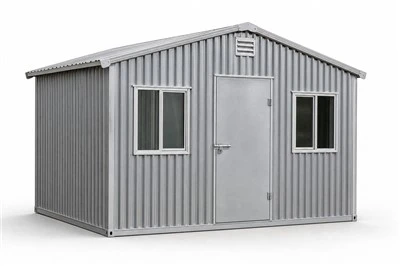
First, let’s get one thing straight: folding container houses aren’t the flimsy, pop-up toy structures some people picture. A lot of the skepticism starts with comparing them to traditional shipping containers, but they’re not cut from the same steel, and they don’t need to be. Wait—let me clarify that. The base of every folding unit we manufacture starts with corrugated steel that’s hot-dip galvanized, a process where we dip the entire frame and exterior panels in molten zinc to prevent rust. Most competitors use a spray-on zinc coating, which wears off in three to five years, but our hot-dip process adds a 40-year rust warranty for the steel structure. I learned this lesson early on in my career, when I supplied a set of folding units to a construction site in coastal Florida. The first winter there, two of the competitor units started showing rust spots on the corners within 18 months. We’d installed ours three months earlier, and they still looked as good as the day we dropped them off. That’s the kind of real-world proof that stuck with me.
Durability for these units breaks down into three main areas: structural integrity, weather resistance, and interior long-term performance. Let’s start with structure, because that’s what keeps the whole thing standing when a wind gust hits or someone moves it across a jobsite. When a folding container house is in its “deployed” state—fully extended, locked into place—it acts like a rigid rectangular frame, similar to a standard modular building, but with hinges that are engineered to take thousands of open-and-close cycles. Our engineering team runs fatigue tests on every hinge and locking mechanism: we cycle them open and closed 10,000 times, which is about the equivalent of opening and closing the unit once a week for 200 years, and we haven’t had a single hinge fail before that threshold. That’s not a marketing stat—that’s data from our in-house test lab, where we replicate the wear and tear of years of use in just a matter of weeks.
The floor structure is another big point of focus. Some budget folding units use thin particle board for floors that warp within a year under heavy foot traffic or when exposed to moisture. We use 18-gauge steel floor joists, covered with a ¾-inch cross-laminated plywood that’s pressure-treated to resist rot and termites, and topped with a non-slip vinyl flooring that’s rated for commercial use. Last year, we delivered four units to a logging camp in northern British Columbia, where the ground freezes and thaws for six months out of the year. The camp manager told me six months later that they’d dragged 50-gallon drums of fuel across the floors, set up heavy woodworking equipment, and even parked a small ATV in one unit, and there wasn’t a single creak, bend, or scratch on the floor. That’s the kind of performance that shows the structure is built for real, heavy use, not just temporary photo ops.
Next, weather resistance. This is where a lot of homeowners and site managers get nervous, especially if they’re in areas with extreme weather—heavy snow, high winds, hurricanes, or sub-zero temperatures. Let’s talk about snow load first. Most standard folding container houses are rated for a 30-pound per square foot snow load, but we upgraded our design to handle 50 pounds per square foot, which is enough for 2 to 3 feet of wet, heavy snow—something that’s common in the Rocky Mountains and upper Midwest. We did a test a few years ago where we loaded the roof of one of our units with 50 pounds of weight for 72 hours, then dropped it and checked for any structural damage. No dents, no bent rafters, no leaks. For high wind areas, all of our units are certified to withstand 110 mph winds when deployed, and if you’re in a hurricane zone, we add extra anchor bolts that can secure the unit to a concrete slab or gravel pad, bringing that wind rating up to 140 mph. That’s on par with many site-built homes in wind-prone areas.
Rain and moisture are another common concern. The sealing on the roof and seams is critical here. We use EPDM rubber roofing, the same material used on commercial flat roofs, which is resistant to UV rays and doesn’t crack or peel for up to 20 years. All the seams around windows, doors, and roof vents are sealed with a butyl rubber caulk that’s rated for 10 years of outdoor use, and we add a secondary layer of flashing around all roof penetrations to prevent leaks. We had a customer in Texas who put our units through a category 2 hurricane a couple of years ago, with 96 mph winds and 12 inches of rain over 48 hours. When we checked in with them after the storm, they sent photos of their other temporary structures—some had roof leaks, one had a missing window—while our units were completely dry inside, no water stains, no damp walls. That’s the kind of performance that matters when your housing or office is the only dry space for your team after a storm.
Now, let’s address the myths. The biggest one I hear is that folding container houses are just temporary structures that won’t last more than 5 or 10 years. That’s only true if you buy the budget models cut corners on materials. The average lifespan of our folding units, based on our customer data from the last decade, is 25 to 30 years with basic maintenance. That’s about the same as a well-built stick-built tiny home, and longer than some prefab modular units that use cheap materials. Another myth is that they’re too heavy for most sites, or that moving them will damage them. Our units weigh between 8,000 and 12,000 pounds, depending on size, which is light enough to move with a standard flatbed truck, and we design all the lifting points to be reinforced so that moving the unit doesn’t put stress on the hinges or frame. We’ve had units moved four or five times over their lifespan—from a construction site to a remote village, from a tiny home community to a festival site—and they’ve held up perfectly each time.
Interior durability is often overlooked, but it’s what makes the unit livable or functional long-term. The walls are lined with ½-inch fire-resistant drywall, and we add insulation rated for R-19 (enough to keep the interior at a comfortable temperature in 20-degree weather) with a vapor barrier to prevent mold growth. We install vinyl windows that are double-pane and rated for energy efficiency, which means they won’t fog up or crack in extreme temperatures. Our doors are solid-core steel doors, not flimsy hollow ones, so they won’t warp or squeak after years of use. I had a customer who used our units as permanent tiny homes in Oregon—they’ve been living in their units for eight years now, and they told us the only maintenance they’ve done is repaint the exterior once and replace the HVAC filter twice. That’s the kind of low-maintenance durability that makes these units a smart investment, not just a quick fix.
Maintenance is a key part of longevity, too. Even the most durable structure will fail if you don’t take basic care of it. We provide every customer with a maintenance guide that’s simple to follow: inspect the roof seams once a year, tighten anchor bolts every two years, and touch up any small rust spots (though with our hot-dip galvanized steel, rust spots are rare—they’d only happen if you scratch the paint on a corner and don’t touch it for 10 years). We also offer a 10-year structural warranty on all our units, which covers any defects in the frame, hinges, or roof that aren’t caused by user error or extreme natural disasters. That’s something that sets us apart from a lot of smaller suppliers who don’t offer long-term warranties because they cut costs on materials.
So, are folding container houses durable? The short answer is yes—when they’re built with high-quality materials, tested for real-world conditions, and maintained properly. They’re not the disposable, flimsy structures some people assume they are. They’re built to be moved, stacked, used in extreme weather, and last for decades, whether they’re serving as emergency housing, a construction site office, a tiny home, or a community center.

If you’re looking for a durable solution for your next project, and you want to ask more about our design specs, load ratings, or warranty terms, feel free to reach out to our team to discuss your specific needs. We can walk you through the tests we run on every unit, share references from customers in your region, and help you find the right size and features to fit your project.
Z-folding Container House References
ASTM International. (2020). Standard Specification for Hot-Dip Galvanized Coatings on Iron and Steel Products.
National Fire Protection Association. (2019). Standard for Fire Safety in Temporary Structures.
American Society of Civil Engineers. (2016). Minimum Design Loads and Associated Criteria for Buildings and Other Structures.
Tangshan Jingrong Trading Co., Limited
With abundant experience, we are one of the most professional folding container house manufacturers and suppliers in China. Please feel free to wholesale customized folding container house made in China here from our factory. For price consultation, contact us.
Address: Room 1103, Tangshan Rongtong Building, Lubei District, Tangshan City, Hebei Province.
E-mail: Linda@tscontainerhouse.com
WebSite: https://www.tscontainerhouse.com/
