As the owner of a small manufacturing company that’s been supplying combined dryers for over a decade, I get asked this question at least three times a week: “What’s the real difference in price between a basic combined dryer and a high-end model?” It’s not a simple answer, because the gap between the two isn’t just about parts or brand names—it’s about what you’re actually getting for your money. I’ve seen customers walk away from basic models only to call me a year later, frustrated by breakdowns that a high-end unit would have avoided. Let me break this down the way I do when I sit across from you in my office, no jargon, no sales pitch—just the facts. Combined Dryer
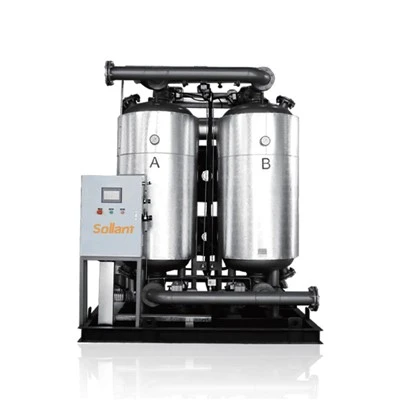
First, let’s define what we’re talking about here. A combined dryer (sometimes called a combination dryer) is a machine that dries materials using a mix of methods: usually hot air circulation plus heat conduction, sometimes with a vacuum component for sensitive materials. Basic models are built for small-scale operations—think a craft bakery drying dough pellets, a small chemical plant handling low-volume powders, or a local agricultural business drying grain for personal use. High-end models are for large-scale manufacturers: pharmaceutical companies that need sterile ingredients, food processing plants drying fruit for national distribution, or chemical factories producing bulk materials. That difference in use case is the foundation of the price gap.
When I source parts for basic dryers, I stick to components that are widely available. The heating elements, for example, are standard wire coils—they work, but they wear out faster. The blower is a simple centrifugal fan, made from mild steel, which rusts if exposed to moisture. The control panel is a basic timer and a couple of dials; you set it and forget it, with no way to adjust for changes in humidity or material moisture content. These parts cost less upfront, which keeps the base price low. I recently sold a basic 50kg combined dryer last quarter for $2,800. That’s not a typo—small units start around $2,500, and medium basic models (up to 200kg) are roughly $6,000 to $8,000.
High-end combined dryers, though? The parts here are industrial-grade, engineered for consistency. The heating elements are stainless steel sheathed, designed to last 10,000+ hours instead of the 2,000 hours you get from basic coils. The blower is made of corrosion-resistant aluminum or even titanium, so it can handle wet, dusty, or chemical-laden materials without rusting. The biggest difference, though, is the control system. High-end models have PLC (programmable logic controller) panels with touchscreens that track real-time data: moisture levels, air temperature, exhaust humidity. If a batch of material is drier than expected, it adjusts the heat automatically; if there’s a blockage in the air flow, it alerts you before it breaks the machine. Last year, a high-end 500kg combined dryer I supplied went for $45,000, and a 1,000kg unit for $85,000. That’s a huge jump, but here’s what most customers miss: the cost difference isn’t just in the initial price—it’s in what you save over time.
Let’s talk about total cost of ownership (TCO) instead of just sticker price, because that’s where the real story is. A basic dryer might cost $6,000 upfront, but if it breaks every 18 months, and each repair is $800, plus downtime that costs you $1,500 per day when your line is down, that adds up. I had a customer last year who bought a basic dryer for his small granola company. In the first two years, he had three breakdowns: the blower rusted out after 12 months, a heating element burned out, and the control dial stuck, ruining a $2,000 batch of oats. By the end of two years, his total cost was $6,000 + (3 x $800) + (2 days of downtime x $1,500) + $2,000 for ruined material = $12,900. That’s almost double the initial price.
A high-end dryer for a similar operation—same volume, same materials—would cost $18,000 upfront. But in those two years, how many breakdowns? Typically, zero. The corrosion-resistant blower doesn’t rust, the PLC control catches issues before they become failures, and the heating element lasts longer. The downtime is almost zero, so he doesn’t lose that $1,500 a day. I calculate that a high-end dryer’s TCO is usually 30-40% lower than a basic model over 5 years. That’s the numbers that matter, not the $12,000 initial gap.
Another factor driving the price difference is performance consistency. For some industries, that’s non-negotiable. Take the pharmaceutical industry: a combined dryer has to remove exactly 12% moisture from powdered ibuprofen, no more, no less. If a basic dryer is off by 2%, that batch is useless, and you have to throw it away. A high-end dryer uses real-time moisture sensors that are accurate to 0.1%, so every batch is the same. One of my long-time pharmaceutical clients told me that a single bad batch from a basic dryer would cost him $50,000 in material, testing, and regulatory fines. He doesn’t even look at basic models anymore—for him, the high-end $50,000 dryer is a no-brainer. For a small craft bakery, though, where a 1% difference in moisture doesn’t ruin a batch, a basic $3,000 dryer is perfect.
Energy efficiency is another big one, and it’s tied to the parts. Basic dryers are less efficient because their control systems don’t adjust for real-time conditions. If the room is cold, they blast more heat than needed; if the material is already drier, they keep running, wasting energy. A 2022 study by the Industrial Energy Efficiency Council found that high-end combined dryers use 25-35% less energy than basic models of the same capacity. Let’s do the math: if your energy bill for a basic dryer is $1,000 a month, that’s $12,000 a year. A high-end unit would cut that by $3,000 to $4,200 a year. Over 5 years, that’s $15,000 to $21,000 in savings—enough to cover almost the entire price gap between a basic and high-end 200kg unit.
Wait, but what about smaller operations that can’t swing $18,000? That’s a question I get too. I tell them: don’t buy a high-end if you don’t need it. I’ve seen people buy a $10,000 high-end dryer for a 50kg a month operation, and they’re wasting money. But if you’re planning to scale in the next 3-5 years, it’s better to buy high-end now than to replace a basic dryer when you outgrow it. Because when you replace it, you not only pay for the new machine, but you lose downtime during the switch. I had a customer who scaled from 50kg to 200kg a year after buying a basic dryer. He had to buy a new one, spend 3 days installing it, and lost $4,500 in production. If he’d bought the high-end 200kg unit initially, he would have had room to scale, no downtime, and saved that $4,500.
Another hidden cost of basic dryers: compliance. For industries like food and pharmaceuticals, there are regulations (FDA in the US, EFSA in the EU) that require traceability of processes. A basic dryer has no way to log temperature and moisture data, so you have to track it manually—more labor, more chance of human error, more risk of failing an inspection. A high-end dryer logs every second of data automatically, so you can pull a report for regulators in 2 minutes. That saves you hundreds of hours of paperwork and potential fines. A food processing client I work with said that manual data tracking took one full-time employee 20 hours a week. He switched to a high-end dryer, and was able to reassign that employee to another role, saving $40,000 a year in labor costs.
Let me also address the “brand” factor, because that’s part of the price gap too. I’ve seen some basic dryers from no-name brands for $1,500, and some high-end from well-known brands for $100,000. But my experience is that the most expensive high-end models aren’t always better, and the cheapest basic models are often unreliable. When I supply dryers, I test every component myself before it leaves my warehouse. For basic models, I use parts from reputable suppliers, not the cheapest I can find, so they last longer than the no-name ones. For high-end models, I build custom control panels with features clients actually need—not extra frills that drive up the price. So you’re not just paying for a logo; you’re paying for durability and support.
Speaking of support: that’s a huge difference between basic and high-end. If your basic dryer breaks at 2am on a Saturday, who do you call? A technician who drives 3 hours, charges $150 an hour, and might not have the right parts. For high-end models, I offer a 24/7 support line, a parts stock on hand, and a technician who can be at your facility in 4 hours, even on weekends. I had a customer last winter whose high-end dryer had a small blower issue. I sent a technician out in 2 hours, fixed it for $200, and he only lost half a day of production. If it was a basic dryer, he would have had to wait until Monday, losing 3 days of production at $1,500 a day—$4,500 total. That support is baked into the high-end price, and it’s worth every penny.
So to sum up the price difference: small basic combined dryers (up to 100kg) are $2,500 to $5,000; medium basic (100-500kg) are $6,000 to $12,000; large basic (500kg+) start at $15,000. For high-end, small units (100kg) are $12,000 to $18,000; medium (100-500kg) are $20,000 to $50,000; large (500kg+) are $60,000 and up. The gap is 3x to 5x the basic price for small units, 2x to 4x for medium, 4x+ for large. But again, that’s just the initial price—your TCO will tell you the real story.
If you’re still not sure which one is right for you, here’s a quick rule of thumb: if your material is sensitive (pharmaceuticals, specialty foods), if you run 24/7, if you need to meet strict regulatory requirements, or if you plan to scale in the next 5 years, go high-end. If you run 8 hours a day, handle low-value materials, and don’t need strict traceability, a basic model will work.
At the end of the day, I don’t sell you a machine based on the price. I sell you a solution. Last month, a customer came in looking for a basic dryer because he only needed it for 2 months to dry a batch of specialty coffee beans. I showed him a small basic model, he bought it, and he saved $10,000 that he would have spent on a high-end unit he didn’t need. Another customer, a chemical manufacturer looking to double production in a year, bought a medium high-end unit, and told me last week that his energy savings already covered the price difference. That’s what I care about—whether the machine works for your business, not just what it costs.
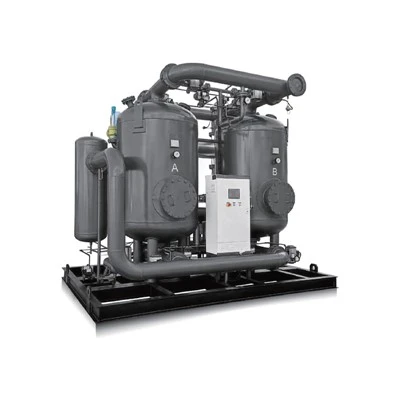
If you’re ready to talk about your specific needs, whether it’s a small basic unit or a high-end model for large-scale production, I’m here to help. We can walk through your material, your production volume, your budget, and figure out what makes sense for you. Don’t waste money on a machine that doesn’t fit, or settle for one that will break down when you need it most. Let’s connect and find the right combined dryer for your operation.
Combined Dryer References
Industrial Energy Efficiency Council. (2022). “Energy Efficiency in Industrial Drying Processes: A Comparative Analysis of Basic and High-End Dryer Models.”
Food and Drug Administration (FDA). (2021). “Guidance for Industry: Process Validation and Clearance for Drying Equipment in Pharmaceutical Manufacturing.”
European Food Safety Authority (EFSA). (2020). “Traceability Requirements for Food Processing Equipment: Control and Monitoring Systems for Industrial Dryers.”
Shanghai Sollant Energy Saving Technology Co., Ltd.
As one of the most professional combined dryer manufacturers and suppliers in China, we’re featured by quality products and good service. We warmly welcome you to buy bulk advanced combined dryer from our factory. If you have any enquiry about cooperation, please feel free to email us.
Address: No.215, Songri Center, Beihongqiao, Jiading District, Shanghai, China
E-mail: info4@sollant.com
WebSite: https://www.sollanttreatment.com/
