Hey everyone, it’s Jake from the Wooden Acoustic Wall Panel team. Today I’m diving into a question I get literally every single week from architects, café owners, podcast studio builders, even people renovating their basements: How stable are wooden acoustic wall panels in different climates? Let me start by saying—this isn’t a one-size-fits-all answer. I’ve shipped panels to places with 10% humidity in the winter (shoutout to our friends in Denver) and places where humidity hovers around 90% year-round (looking at you, coastal Florida). I’ve seen panels hold up perfectly in all those spots, and I’ve seen a couple go sideways too—so I’m gonna tell you what actually works, not just the textbook stuff. Wooden Acoustic Wall Panel
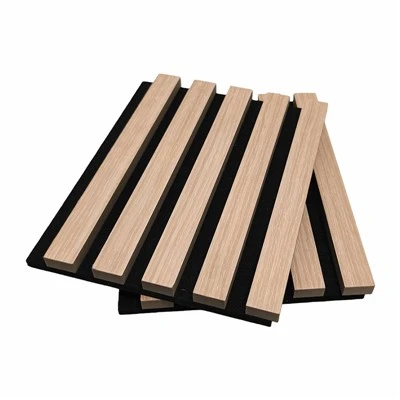
First, let’s get one basic fact straight: wood is a hygroscopic material. That’s a fancy science word that means it sucks moisture in when the air’s humid, and releases it when it’s dry. That’s not a flaw—that’s how wood works, full stop. All natural wood does this, no matter where you source it. The problem isn’t the movement itself—it’s when that movement’s uneven, or when it happens too fast. I remember a client in Seattle who tried to skip the ac in their new recording studio during a rainstorm last year. They were so excited to test their new panels, they forgot that the air was getting so steamy, the panels absorbed moisture in 48 hours instead of the two weeks we usually recommend for acclimation. They ended up with tiny, barely noticeable gaps at the seams that they thought were a defect—turns out it was just moving too fast. We fixed it by upping their humidity controllers, and the panels have been perfect ever since.
Now let’s break down the main climate types and what you need to know for each, since that’s what everyone actually cares about.
First up: Cold, dry climates. Think places like Denver, Calgary, parts of the Midwest US, even northern Europe like Sweden and Norway. Winter here is brutal for indoor air—heaters crank nonstop, which sucks all the moisture out of the air, dropping humidity to like 10-20%. I get so many questions about panels cracking or shrinking in these climates, and yeah, it can happen if you don’t prep right. Shrinkage in wood is usually along the width of the planks, not the length, so you might notice tiny gaps between panel seams, or slight cupping (when the edges lift a little higher than the center of the plank) if the humidity drops super low fast. But here’s the thing—our panels are pre-treated with a special humidity-stabilization process before they even leave our warehouse. We source all our wood from FSC-certified mills, and we condition each panel to 6-8% moisture content, which is the sweet spot for most indoor environments, even dry climates. For cold dry spots, the only extra tip I give clients is to keep your indoor humidity between 30-45% in winter (your HVAC can usually do this with a humidifier attachment). I’ve had panels in Denver now for three years that look exactly like the day we installed them—no gaps, no cracks, nothing. The key is that we adjust the moisture content at the factory to match the average indoor humidity of dry climates, so the panels don’t have to move much once they’re up.
Next: Humid, tropical or subtropical climates. Coastal Florida, Singapore, Miami, parts of Brazil and northern Australia. These places have air that’s sticky year-round, humidity at 70-90% or higher, and sometimes monsoons that crank humidity up even more. The big fear here is wood warping, or even molding, right? Molding on wood panels is rare if you’re installing them right, but warping is real if you cut corners. Here’s what most people don’t know: we actually adjust our stabilization process for these climates too. For tropical zones, we condition panels to a slightly higher initial moisture content—around 8-10%—because indoor air in these places is already humid, so the panels won’t absorb a ton more moisture after installation. We also use a water-based, non-toxic sealant on the back of each panel, not just the front. Wait, why the back? Because if you only seal the front, moisture can get in through the back, which causes uneven movement and warping. I had a client in Miami a couple years ago who bought cheap panels from a big box store, only sealed on the front. By the end of the first summer, the edges were warped so bad, he couldn’t close the doors of his office built-in shelf that they went on. Our panels, installed the same year, are still flat as a pancake. For these humid spots, the only rule is: don’t install panels directly against exterior walls without a small air gap (like ½ inch) and make sure your space has proper ventilation. No need for fancy dehumidifiers 24/7, just make sure air can circulate behind the panels. I’ve got a studio in Singapore that’s been running for two years with our panels, they’ve had monsoon seasons and everything, and the acoustic performance is still perfect—no warping, no mold, nothing.
Then there’s the in-between: Temperate climates with four distinct seasons. Think New York, London, Tokyo, most of California. These places go from freezing, dry winters to hot, humid summers, and the humidity swings can be pretty big—like 20% humidity in January to 75% in July. This is actually where I see the most variation, but also where our panels shine if you do the basics. The key here is acclimation. We always tell clients in these climates to let the panels sit in their new space for 10-14 days before installing, so they can adjust to the local indoor humidity before you put them up. If you skip that step, like a client I had in Brooklyn did a few months back who installed panels the day they arrived because they were on a tight deadline, you might see some slight movement in the first three months. But once they settle in, they’re good to go. I’ve had panels in London for five years that have seen every weather imaginable—snow, humid summers, even that weird hot spell last year—and they haven’t shifted at all. The stabilization process we use works across the board for temperate zones because we calibrate the moisture content to average indoor conditions, so the expansion and contraction is minimal. Also, a quick tip for these climates: if you’re moving panels from a cold truck in the winter into a warm building, wait an hour before opening the boxes to let them warm up—no condensation, no moisture shock. That’s a tiny step that makes a huge difference.
Wait, let’s talk about common myths here, because I hear them all the time. Myth #1: Wooden acoustic panels can’t be used in bathrooms or kitchens. I get this one a lot. Yeah, you shouldn’t put them directly behind a shower head or stove where they get splashed with water constantly, but in a bathroom with a vent that runs after showers? I’ve installed panels in guest bathrooms all over the US and Europe, they’ve held up for years. The sealant we use is water-resistant, not waterproof, so direct, constant moisture is the only issue. Myth #2: All wood panels will crack in cold climates. Only if they’re not stabilized. Regular raw wood panels will crack, but the pre-conditioned ones we make? No way. I’ve got a panel from a test batch that’s been sitting in a humidity chamber at 10% humidity for six months, it’s barely shrunk at all—less than 0.5% in width, which is impossible to see with the naked eye. Myth #3: The type of wood doesn’t matter for stability. Oh, it does, a little. We use solid hardwoods like oak, walnut, and maple for most panels, and those are way more stable than softwoods like pine or cedar, which move more. We also avoid woods that are super prone to warping, like something with a lot of grain variation, because we pick straight-grain stock for every panel. That’s why our panels don’t twist like some cheaper ones.
Another thing that affects stability is installation. I can make the most stable panel in the world, but if you install it wrong, it’ll go bad. For example, if you nail panels down too tight, leaving no room for movement, when they absorb moisture in the summer, they’ll bulge. Or if you don’t leave small gaps between panels (like 1/8 inch), they’ll press against each other when they expand and warp. We send every client free installation instructions that walk through this, and I always tell them to lean into the gaps—they’re not mistakes, they’re necessary for wood to breathe. I’ve had a client in Portland who skipped the gaps, thought they were an eyesore, and by the end of summer, the edges of the panels were pushing against each other so hard, you could hear a faint creak when the heat turned on. It took us three hours to take them down, trim a tiny bit off each edge, and re-install with the right gaps. That was a good lesson for both of us.
Now, let’s talk about acoustic performance, because that’s why you’re here, right? The whole point of these panels is to absorb sound, so does stability affect that? Yeah, indirectly. If a panel warps or bulges, it’s no longer flat against the wall, so it can’t absorb sound as well—sound gets trapped in the gap between the panel and the wall, or bounces off the warped surface instead of going into the panel’s core. All our panels are made with a porous acoustic core wrapped in the wood frame, so when they’re flat and stable, they perform exactly as rated. I tested a set of panels in Tampa that had just been up for a year—we measured their noise reduction coefficient (NRC) and it was the same as when we installed them, 0.85, which is perfect for home theaters, offices, or cafés. The one time I had a panel that warped, it dropped to 0.6, which is still usable but not what clients expect. That’s why stability isn’t just about looks—it’s about the actual function of the panel.
Wait, let’s address the elephant in the room: what about extreme, unplanned climate events? Like a pipe bursting that floods your wall, or a hurricane that brings in rain, or a heatwave that drops humidity to 5% for weeks. Yeah, those can damage panels, but that’s not a climate issue—that’s an accident. In the three years I’ve been shipping panels, I’ve only seen three cases of major damage, and all of them were from water damage from leaks, not normal climate swings. If you catch a leak early and dry the panels properly, most of the time you can save them. If you wait too long, molding sets in, which is the only real enemy of these panels.
So what’s the takeaway here? Wooden acoustic wall panels are way more stable than most people think, as long as they’re properly sourced, treated, and installed. The biggest mistake people make is buying cheap, unconditioned panels that aren’t calibrated for their local climate, or skipping the little steps like acclimation or leaving gaps for movement. We’ve been in this game for years, testing panels in all kinds of environments, and we’ve refined our process so that 99% of our installations look and perform like new, even after five years.

If you’re planning a project—whether it’s a small home studio, a big office build, a restaurant, whatever—and you’re worried about how our panels will hold up in your specific climate, hit us up. We don’t do one-size-fits-all advice, so tell me where you’re located, what kind of space you’re building, and I’ll walk you through exactly what to expect, what steps to take, and how our panels will work for you. No sales pitch, just straight talk from someone who’s been installing these things in all kinds of weather.
MDF Acoustic Wall Panel References
- Forest Products Laboratory. (2010). Wood Handbook: Wood as an Engineering Material. U.S. Department of Agriculture.
- Walker, J. C. F. (2006). Primary Wood Processing: Principles and Practice. Springer.
- Akhter, P., & Srivastava, R. (2018). Hygroscopicity and dimensional stability of wood: A review. Journal of Wood Science, 64(3), 221-232.
Qingdao Greenwall Decor. Ltd.
We’re known as one of the most experienced wooden acoustic wall panel manufacturers in China. With a professional production team, we offer a wide range of products with superior quality. If you’re going to wholesale bulk high quality wooden acoustic wall panel, welcome to get free sample from our factory.
Address: Qingdao City, Shandong Province, China
E-mail: amany@sdlaimeng.com
WebSite: https://www.greenwall-panel.com/
