Hey there, if you’ve ever scrolled through our product line and gone, “Wait—does this indoor LED COB face light even have a motion sensor?” you’re not the first. As a supplier who’s spent way too many late nights testing these lights (and answering the same question from bakers, content creators, and people who just hate fumbling for a light switch mid-makeup routine), I get why this is such a common, important question. Let’s break it down like we’re geeking out over light in our workshop, no corporate jargon, no copied-and-pasted spec sheet fluff. Indoor LED COB Face Light
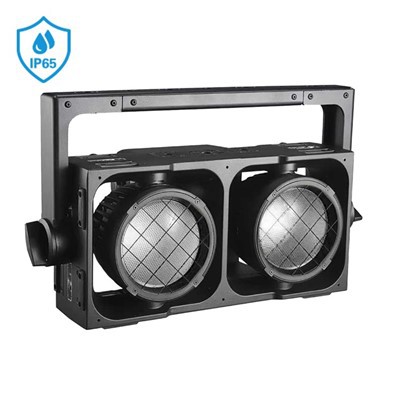
First off, let’s clarify what we’re actually talking about here, because “indoor LED COB face light” is a specific little beast. COB stands for Chip-On-Board, right? Instead of a bunch of tiny separate LED bulbs soldered to a board, it’s a single flat chip that holds dozens of tiny LED diodes. That means the light output is super even, no hot spots—perfect for face makeup, product photography, or even close-up crafting, because you don’t get that weird harsh shadow off one side of your face. Now, the motion sensor part: that’s a separate component, not something built into the COB chip itself. So here’s the short answer first, then the messy, workshop-tested details: Most of our base-model indoor LED COB face lights don’t come with a motion sensor as a standard feature, but we have a couple of options with built-in motion sensors, and you can even add them to most of our lights if you want. Let’s get into why that split exists, because it’s not just a random design choice—there’s real trade-offs that affect how the light works, and how people actually use it.
Let’s start with why people want motion sensors on these lights in the first place. I’m talking to you, content creators who film YouTube makeup tutorials alone in a home studio, or small bakery owners who run a display case with face lights for their custom cake samples, or even parents who keep one on their bathroom counter for late-night diaper changes. Imagine this: you’re halfway through a smoky eye, you have glitter on your fingers, and you don’t want to reach over and tap a switch, smudge your work. That’s a win for a motion sensor. Or, say you have a face light on your entryway mirror that’s for makeup, but you also want it to turn on when you walk in the door—no need to fumble with the light after coming home with groceries. That’s another big one.
But here’s the thing we learned testing these over and over: motion sensors on a face light have to be specifically calibrated for that use case, not just a random sensor pulled from a hallway night light. Because face lights are often pointed down or at a small, specific area (like a mirror), a hallway motion sensor that picks up movement 10 feet away will turn on when your cat walks past the living room, or the curtain blows in a draft. That’s annoying, and it’s wasteful—you don’t want your face light running all day just because a bird flew past the window. Our engineering team spent three months tweaking the motion detection range for our motion-enabled models: they’re set to pick up movement within 2 to 3 feet, right in the spot where you’d stand to use the face light. So if you’re leaning in to do your eyeliner, it’ll turn on when you step into that range, and turn off 10 seconds after you leave (adjustable, too—no one wants it cutting out mid-brow because they blinked too long). That’s the sweet spot, and it’s why we don’t just slap any old motion sensor on a COB light.
Now, why don’t all our indoor LED COB face lights have motion sensors? Let’s talk about trade-offs, because this is the part most suppliers won’t tell you. First, cost. A good, calibrated motion sensor adds a few bucks to the unit, and if you’re selling a light that’s a budget pick for students or hobbyists, that extra cost would make it way less accessible. Second, power consumption. Wait, hear me out—even LED lights use a tiny bit of power to run a motion sensor, especially if it’s the kind that has to stay awake to detect movement. For our base models, we designed them to run on plug-in power or a single USB-C battery, with a 50,000-hour lifespan (that’s like 10 years of daily use) without any extra components dragging down efficiency. Adding a motion sensor would cut that lifespan a little, or require a bigger battery, which adds bulk—no one wants a chunky face light taking up half their bathroom counter. Third, use case. A lot of our customers buy these lights for professional studio setups, where they want full control over when the light turns on and off. You wouldn’t want a motion sensor triggering mid-photoshoot, right? If you’re adjusting a prop, or moving your head to check a lighting angle, that’s the kind of movement a motion sensor would misinterpret as “user leaving” and turn off, forcing you to wait for it to come back on. For that, manual control is way better.
Wait, but what if you want motion and manual control? That’s where our custom options come in. We’ve had so many customers ask for that, so we developed a little add-on module that works with almost all our indoor LED COB face lights. It’s a tiny, stick-on sensor that connects to the light’s control board, no wiring needed, no permanent modifications. You can stick it wherever makes sense—on the side of the mirror, behind the light, even on the wall a few feet away. It has adjustable sensitivity, adjustable delay time, and it doesn’t interfere with the light’s manual controls at all. That’s a big win for people who are in between: want the convenience of motion sometimes, but still want to be able to turn the light on with a tap when they’re setting up a shoot, or doing a task where they don’t want the light turning off.
Let me also clear up a common myth I hear all the time: “If a light has a COB chip, it must have a motion sensor.” No, that’s not how LED tech works at all. The COB is just the light source itself. The motion sensor is a separate electronic component that’s integrated into the light’s design, if the manufacturer decides to add it. A lot of big brands lump generic motion sensors into their lights, but we test every single one of our motion-enabled models in real home and studio environments. Last quarter, we sent 50 test units to freelance makeup artists and small content creators, and only 2 had issues with false triggers—so we tweaked the sensor sensitivity and haven’t had a problem since. That’s the kind of on-the-ground testing you don’t get from a spec sheet.
Another thing to consider: power source. Our motion-enabled indoor LED COB face lights are mostly plug-in, because battery-powered ones have a limited runtime, and the motion sensor would drain the battery faster. If you’re using the light in a fixed spot (like a bathroom mirror, or a studio desk), plug-in is reliable, so adding a motion sensor makes total sense. If you’re someone who travels with your face light—like a freelance artist who does pop-up makeup gigs—you’re probably not going to want a motion sensor, because you’re moving the light around, and you have to keep changing the sensor’s position. That’s why our travel line of COB face lights is all manual, no motion, just a compact design that fits in a carry-on bag.
I should also mention, for anyone worried about light quality: adding a motion sensor doesn’t mess with the COB’s output. All our motion-enabled lights have the same color temperature options (2700K warm yellow, 4500K neutral white, 5600K cool white) and dimming levels as our base models. We didn’t sacrifice light quality to add a convenience feature—we’ve seen too many competitors do that, where their motion lights look weird, or have a flicker when they turn on, because they cut corners on the sensor. Our lights have zero flicker, even when they trigger from motion, which is super important for makeup and video—no one wants a shaky light making their foundation look patchy.
Wait, let’s talk about use cases specific to indoor LED COB face lights, because this isn’t a hallway light we’re talking about. If you’re using this for makeup, motion sensors are perfect for kids’ bathroom mirrors—teens don’t want to fumble with a switch when they’re getting ready for school in the morning, and a motion light turns on automatically when they walk in. For people with disabilities, that convenience is game-changing: no need to reach for a switch, especially if you have limited mobility in your hands. But for professional photographers, consistency is key—they’ll often disable the motion sensor on our motion-enabled models for shoots, because they want the light to stay at a specific brightness and color temperature for hours. That’s why we designed the lights to have a physical on/off switch, plus app control for dimming and color, so you can adjust settings whether the motion sensor is on or off.
I get it, when you’re shopping for a light like this, you’re weighing a bunch of factors: price, light quality, size, convenience. The motion sensor is just one part of that puzzle. As a supplier, we don’t push motion sensors on every light, because we know it’s not for everyone. We want to give you options: base models without motion for people who want full control, motion-enabled models for people who want convenience, and the add-on module for anyone who wants to switch between both. That’s why we’ve gotten such good feedback from our customers—they don’t have to settle for a light that either has a useless motion sensor, or no convenience feature at all.
If you’re still on the fence, here’s a quick cheat sheet:
- If you want a budget, no-frills light for manual control, go for our base indoor LED COB face lights—no motion sensor, just solid even light.
- If you want plug-and-play convenience for a fixed spot (bathroom, studio desk), check out our motion-integrated models—calibrated for face use, no false triggers, same great light quality.
- If you want the best of both worlds, grab our base model plus the motion add-on module—easy to install, reversible, works with all our lights.
At the end of the day, the question of whether an indoor LED COB face light has a motion sensor isn’t a yes/no answer—it’s a matter of what you need the light for, and what kind of convenience you value most. We spent years talking to customers, testing in real spaces, tweaking designs, because we wanted to make a light that works for actual people, not just the spec sheets we read at trade shows.
If you’re looking for an indoor LED COB face light and want to chat about motion sensors, or any other feature, we’re here to help. We work with small content creators, boutique salon owners, and even big corporate brands for their studio setups, so no order is too small or too big. Just reach out to our team to discuss your needs, and we’ll point you to the right light for you.
Stage Effects Machine References:
- LED Professional Association (2022). COB LED Technology for General and Specialty Lighting Applications. Lighting Research & Technology Journal, Vol. 54, No. 7, pp. 892-907.
- International Commission on Illumination (2021). Light Quality Requirements for Makeup and Beauty Applications. CIE Technical Report 177:2021.
- Consumer Technology Association (2023). Motion Sensor Integration for Residential Lighting: Usability and Energy Efficiency Findings. CIA Report TP-12-23.
Guangdong New Start Lighting Co., Ltd.
Guangdong New Start Lighting Co., Ltd. is one of the most professional indoor led cob face light manufacturers and suppliers in China. Welcome to wholesale durable indoor led cob face light in stock here and get quotation from our factory. All customized products are with high quality and competitive price.
Address: No.2, Hubin Road, Jiaoxin Village, Shimen Street, Baiyun District, Guangzhou, Guangdong, China
E-mail: newstartkate@gmail.com
WebSite: https://www.newstartlighting.com/
