The stretchability of rigid-flex PCBs is a topic that combines the unique characteristics of both rigid and flexible printed circuit boards. As a supplier in the rigid-flex PCB industry, I’ve witnessed firsthand the growing demand and the diverse applications that hinge on this stretchability factor. In this blog, I’ll delve into what stretchability means in the context of rigid-flex PCBs, its significance, and how we, as a supplier, can meet these requirements. Rigid Flex PCB
Understanding Rigid-Flex PCBs
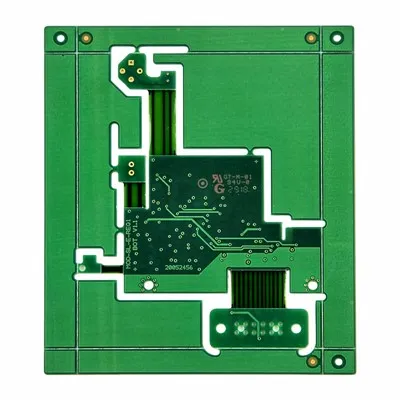
Before we discuss stretchability, it’s essential to understand what rigid-flex PCBs are. A rigid-flex PCB is a hybrid circuit board that combines rigid and flexible substrates. The rigid sections provide mechanical support, stability, and a platform for mounting components, while the flexible sections offer flexibility, allowing the board to bend, fold, or twist. This combination makes rigid-flex PCBs ideal for applications where space is limited, weight needs to be minimized, and high reliability is required.
Defining Stretchability in Rigid-Flex PCBs
Stretchability in rigid-flex PCBs refers to the ability of the flexible sections of the board to be stretched or elongated without causing damage to the conductive traces, insulating materials, or other components. Unlike traditional rigid PCBs, which are designed to be static and non-flexible, rigid-flex PCBs need to withstand various degrees of mechanical deformation, including stretching.
The stretchability of rigid-flex PCBs is influenced by several factors:
Material Selection
The choice of materials for the flexible sections of the board is crucial. Polyimide is a commonly used material for flexible substrates due to its excellent mechanical properties, including high flexibility, heat resistance, and chemical resistance. The thickness and quality of the polyimide film can significantly affect the stretchability of the PCB. Thinner films generally offer greater flexibility and stretchability, but they may also be more prone to damage.
Trace Design
The design of the conductive traces on the flexible sections of the board also plays a vital role in determining stretchability. Traces that are too narrow or too closely spaced may be more likely to break or delaminate when the board is stretched. Designers often use techniques such as serpentine or meandering trace patterns to increase the flexibility and stretchability of the traces. These patterns allow the traces to expand and contract without experiencing excessive stress.
Adhesive Properties
The adhesive used to bond the flexible and rigid sections of the board can impact stretchability. A high-quality adhesive with good flexibility and adhesion strength is essential to ensure that the different sections of the board remain securely attached during stretching. Poor adhesive properties can lead to delamination or separation of the layers, which can compromise the functionality of the PCB.
Significance of Stretchability
The stretchability of rigid-flex PCBs offers several advantages in various applications:
Miniaturization
In many modern electronic devices, such as smartphones, wearables, and medical devices, space is at a premium. Rigid-flex PCBs with high stretchability allow designers to create more compact and lightweight devices by folding or bending the board into complex shapes. This enables the integration of more components into a smaller space, leading to smaller and more portable devices.
Improved Durability
Stretchability enhances the durability of rigid-flex PCBs by allowing them to withstand mechanical stress and vibrations. In applications where the PCB may be subjected to repeated bending or stretching, such as in automotive or aerospace systems, a stretchable PCB is less likely to fail due to fatigue or mechanical damage. This results in longer product lifetimes and reduced maintenance costs.
Enhanced Design Flexibility
The ability to stretch the flexible sections of the PCB provides designers with greater freedom to create innovative and unique designs. They can design boards that conform to the shape of the device or its environment, enabling more ergonomic and aesthetically pleasing products. This design flexibility is particularly valuable in industries such as consumer electronics, where product design plays a crucial role in market competitiveness.
Measuring Stretchability
Measuring the stretchability of rigid-flex PCBs is a complex process that involves several parameters. One of the most common methods is to measure the maximum elongation or strain that the flexible section of the board can withstand before failure. This is typically expressed as a percentage of the original length of the board.
Other important parameters include the modulus of elasticity, which measures the stiffness of the material, and the yield strength, which indicates the maximum stress that the material can withstand without permanent deformation. These parameters can be used to evaluate the mechanical properties of the PCB and to predict its performance under different stretching conditions.
Our Approach as a Supplier
As a supplier of rigid-flex PCBs, we understand the importance of stretchability in meeting the needs of our customers. We take a comprehensive approach to ensure that our PCBs offer high stretchability and reliability:
Material Expertise
We have a team of experts who are well-versed in the selection of materials for rigid-flex PCBs. We carefully evaluate the properties of different materials, including their flexibility, stretchability, and durability, to choose the best materials for each application. We work closely with our material suppliers to ensure that we have access to the latest and highest-quality materials.
Advanced Design and Manufacturing Techniques
We use advanced design and manufacturing techniques to optimize the stretchability of our rigid-flex PCBs. Our design engineers are experienced in creating trace patterns and layouts that maximize flexibility and minimize stress on the conductive traces. We also use state-of-the-art manufacturing equipment and processes to ensure the precise fabrication of our PCBs, including the bonding of the flexible and rigid sections.
Quality Control
We have a rigorous quality control system in place to ensure that our PCBs meet the highest standards of stretchability and reliability. We conduct extensive testing on our PCBs, including mechanical testing, electrical testing, and environmental testing, to ensure that they can withstand the specified stretching conditions and perform reliably in real-world applications.
Applications of Stretchable Rigid-Flex PCBs
Stretchable rigid-flex PCBs have a wide range of applications in various industries:
Consumer Electronics
In consumer electronics, stretchable rigid-flex PCBs are used in smartphones, tablets, wearables, and other portable devices. They enable the design of more compact and lightweight devices with improved functionality and durability. For example, in a smartwatch, a stretchable PCB can be used to connect the different components, such as the display, battery, and sensors, while allowing the watch to be worn comfortably on the wrist.
Medical Devices
Medical devices often require high reliability and flexibility. Stretchable rigid-flex PCBs are used in applications such as implantable devices, diagnostic equipment, and wearable health monitors. They can be designed to conform to the shape of the human body, allowing for more comfortable and accurate monitoring of vital signs.
Automotive and Aerospace
In the automotive and aerospace industries, stretchable rigid-flex PCBs are used in applications where space is limited and reliability is critical. They are used in engine control systems, avionics, and other electronic components that need to withstand harsh environments and mechanical stress.
Conclusion
The stretchability of rigid-flex PCBs is a crucial factor that offers numerous advantages in terms of miniaturization, durability, and design flexibility. As a supplier, we are committed to providing high-quality rigid-flex PCBs with excellent stretchability to meet the diverse needs of our customers. Whether you are in the consumer electronics, medical, automotive, or aerospace industry, we have the expertise and resources to develop custom solutions that meet your specific requirements.
Flex PCB If you are interested in learning more about our rigid-flex PCBs or would like to discuss your project, please feel free to contact us. We look forward to the opportunity to work with you and help you bring your innovative ideas to life.
References
- "Flexible and Stretchable Electronics for Biomedical Applications" by John A. Rogers, Todd Coleman, and Yonggang Huang.
- "Printed Circuit Board Design and Manufacturing" by IPC – Association Connecting Electronics Industries.
- "Advanced Materials for Flexible and Stretchable Electronics" by Zhenan Bao, John A. Rogers, and Takao Someya.
Huaswin Electronics Technology Co., Ltd.
Address: Building A2, Hao Hai Hong Industrial Park, No.3 Yu He Road, Gong He, Sha Jing, Bao An, Shenzhen
E-mail: sales@huaswin.com
WebSite: https://www.huaswin-pcba.com/
