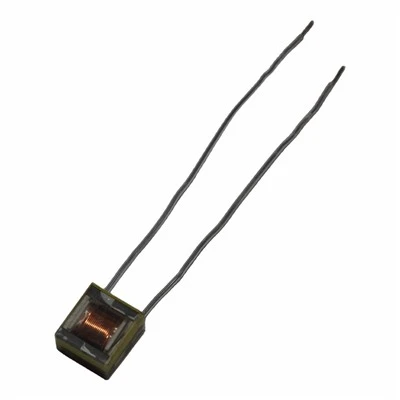
As a supplier of ferrite core inductors, I often get asked about the maximum frequency these components can handle. This question is crucial as it directly impacts the performance and suitability of ferrite core inductors in various electronic applications. In this blog post, I’ll delve into the factors affecting the maximum frequency of ferrite core inductors, share some real – world insights based on our experience in the industry, and offer guidance on selecting the right inductor for high – frequency applications. Ferrite Core Inductor
Understanding Ferrite Core Inductors
Before discussing the maximum frequency, let’s have a quick overview of ferrite core inductors. An inductor is a passive electronic component that stores energy in a magnetic field when an electric current flows through it. A ferrite core inductor consists of a coil of wire wound around a ferrite core. Ferrite is a ceramic material composed of iron oxide (Fe₂O₃) mixed with other metal oxides. It has high magnetic permeability, which means it can enhance the magnetic field generated by the current in the coil, thereby increasing the inductance of the component.
Factors Affecting the Maximum Frequency
Ferrite Material Properties
The type of ferrite material used in the core is one of the most significant factors influencing the maximum frequency. Different ferrite materials have different frequency characteristics. For example, manganese – zinc (Mn – Zn) ferrites are known for their high initial permeability and relatively low losses at low to medium frequencies (typically up to a few MHz). They are commonly used in power supplies and transformers where high inductance values are required at these frequency ranges.
On the other hand, nickel – zinc (Ni – Zn) ferrites have lower initial permeability but can operate at much higher frequencies, often up to several hundred MHz or even GHz. They have better high – frequency performance because of their lower eddy – current losses. Eddy currents are induced currents that circulate within the ferrite core and cause power losses in the form of heat. At high frequencies, these losses can become significant and limit the performance of the inductor.
Core Geometry
The physical shape and size of the ferrite core also play a role in determining the maximum frequency. A larger core cross – sectional area generally allows for higher inductance values but may also increase the eddy – current losses. To reduce these losses at high frequencies, cores with smaller cross – sectional areas or special geometries, such as toroidal cores, are often used.
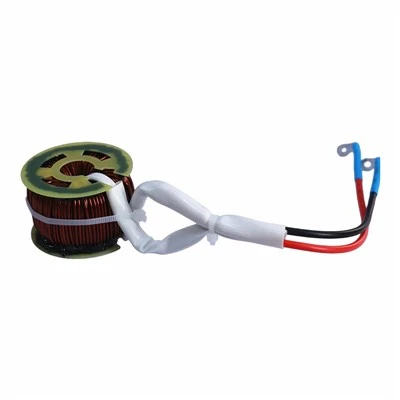
Toroidal cores have a circular shape, which provides a closed magnetic path. This reduces the magnetic flux leakage and the associated losses, making them suitable for high – frequency applications. Additionally, the winding configuration on the core can affect the inductor’s performance. A tightly wound coil with a uniform pitch can help reduce parasitic capacitances and improve the high – frequency response.
Winding Resistance and Parasitic Capacitance
The resistance of the wire used in the coil, known as the winding resistance, can cause power losses in the inductor. At high frequencies, these losses become more prominent as the alternating current experiences increased opposition due to the skin effect. The skin effect causes the current to flow mainly on the outer surface of the wire, effectively increasing the resistance.
Parasitic capacitances also form between the turns of the coil and between the coil and the core. These capacitances can resonate with the inductance of the inductor at certain frequencies, resulting in a sharp increase in impedance and a degradation of the inductor’s performance. To minimize these effects, special winding techniques and the use of low – capacitance wires can be employed.
Real – World Applications and Maximum Frequency Requirements
Switch – Mode Power Supplies (SMPS)
In SMPS, ferrite core inductors are used to store and transfer energy between the input and output stages. The switching frequency of SMPS has been increasing over the years to reduce the size and weight of the power supply. Modern SMPS can operate at frequencies ranging from tens of kHz to several MHz. For these applications, Mn – Zn ferrites are commonly used as they can provide high inductance values with relatively low losses at these frequencies.
RF Communication Systems
In radio frequency (RF) communication systems, such as mobile phones, Wi – Fi routers, and satellite communication equipment, ferrite core inductors are used in filters, matching networks, and oscillators. These applications often require inductors that can operate at frequencies in the MHz to GHz range. Ni – Zn ferrites are the preferred choice for these high – frequency RF applications due to their low eddy – current losses and good high – frequency performance.
Measuring and Testing the Maximum Frequency
To determine the maximum frequency that a ferrite core inductor can handle, several testing methods can be used. One common method is to measure the impedance of the inductor as a function of frequency using a network analyzer. The impedance curve can provide valuable information about the inductor’s performance, including the resonant frequency and the frequency range where the losses are acceptable.
Another approach is to measure the quality factor (Q) of the inductor. The Q factor is a measure of the efficiency of the inductor and is defined as the ratio of the reactance to the resistance. A higher Q factor indicates lower losses and better performance. By measuring the Q factor at different frequencies, we can identify the frequency range where the inductor operates most efficiently.
Selecting the Right Ferrite Core Inductor for High – Frequency Applications
When selecting a ferrite core inductor for high – frequency applications, the following considerations should be taken into account:
- Frequency Range: Determine the operating frequency range of your application and choose a ferrite material that is suitable for that range. For frequencies up to a few MHz, Mn – Zn ferrites may be appropriate, while for higher frequencies, Ni – Zn ferrites are a better choice.
- Inductance Value: Select an inductor with the appropriate inductance value for your circuit. The inductance value will depend on the specific requirements of your application, such as the filtering or impedance – matching needs.
- Q Factor: Choose an inductor with a high Q factor to minimize losses and improve the performance of your circuit.
- Size and Package: Consider the physical size and package of the inductor to ensure it fits within your circuit board layout.
Our Experience as a Ferrite Core Inductor Supplier
Over the years, we have worked with a wide range of customers in various industries. Through these experiences, we have gained in – depth knowledge of the challenges and requirements associated with high – frequency applications. We understand that each customer’s needs are unique, and we strive to provide customized solutions to meet those needs.
We have a team of experienced engineers who can assist you in selecting the right ferrite core inductor for your application. We can also conduct customized testing and optimization to ensure that the inductor meets your specific performance requirements. Our state – of – the – art manufacturing facilities allow us to produce high – quality ferrite core inductors with consistent performance and reliability.
Contact Us for Your Ferrite Core Inductor Needs
Inductor If you are looking for a reliable ferrite core inductor supplier for your high – frequency applications, we would be delighted to assist you. Our team is ready to discuss your requirements and provide you with the best solutions. Whether you need standard inductors or customized designs, we have the expertise and resources to meet your needs. Contact us today to start a conversation about your ferrite core inductor requirements.
References
- "Ferrite Core Technology Handbook"
- "RF Circuit Design" by Chris Bowick
- "Power Electronics: Converters, Applications, and Design" by Ned Mohan, Tore M. Undeland, and William P. Robbins
Dongguan Hensiron Electric Co., Ltd.
As one of the most professional ferrite core inductor suppliers in China, we have world-leading production equipment and strong manufacturing capabilities. Please feel free to buy high quality ferrite core inductor made in China here from our factory. Customized orders are welcome.
Address: Building 4, Xinxing Industrial Zone, Wangao Road, Wanjiang Street, Dongguan City, China
E-mail: jessica@dghensiron.com
WebSite: https://www.dghensiron.com/
