When a customer first reaches out to our team as a fluorosilicone supplier, the question I hear most often isn’t about heat resistance or chemical stability—it’s about biocompatibility. That makes sense, right? If you’re looking at sealants, gaskets, tubing, or molded parts for medical devices, food processing equipment, or even implantable components, the material’s ability to interact safely with living tissue or consumables isn’t just a nice-to-have; it’s a non-negotiable. Fluorosilicone is often overshadowed by its more common silicone cousin (the stuff you know from kitchen spatulas and breast pump parts), so it’s no surprise people are confused about how it stacks up when it comes to biocompatibility. I’ve spent 12 years working with fluorosilicone in custom formulations, troubleshooting for clients in orthopedics, pharmaceutical manufacturing, and food and beverage, so I can share what I’ve learned beyond the textbook definitions. Fluorosilicone

First, let’s cut through the jargon: biocompatibility, per the ISO 10993 standard (the global gold standard for this testing), doesn’t mean a material is “100% non-reactive.” It means it performs as intended in a specific biological environment without causing adverse effects—no toxicity, no inflammation, no tissue rejection, no leaching of harmful substances. For silicone, this is a well-worn path: traditional polydimethylsiloxane (PDMS) is used in everything from catheters to contact lenses, with decades of clinical data to back it up. Fluorosilicone, however, is a hybrid polymer: it combines the siloxane backbone that makes silicone flexible and inert with fluorine groups attached to the side chains, which give it superior resistance to fuels, oils, and aggressive chemicals. That chemical modification is where most questions about biocompatibility come from: adding fluorine can sound like it might introduce a foreign, reactive element.
Myth vs. reality here is key. Early on, in the 1970s and 80s, the first generations of fluorosilicone had higher levels of residual catalysts and unreacted monomers—leftovers from manufacturing that could leach out and trigger mild inflammatory reactions in tissue. Those formulations were mostly used in aerospace and industrial seals, where biocompatibility wasn’t a requirement. But modern production processes have changed that entirely. Today, we use platinum-catalyzed hydrosilylation curing (instead of tin-based catalysts that can leave toxic residues) and post-curing protocols that eliminate 99.9% of volatile organic compounds (VOCs) and residual monomers. The fluorine groups themselves, when properly cross-linked into the polymer structure, are not bioavailable—they’re locked tightly into the molecular chain, so they don’t leach into surrounding tissue or food.
I can point to a client of mine in the pharmaceutical industry, for example, who switched from traditional silicone tubing to fluorosilicone two years ago for their sterile drug manufacturing lines. They were dealing with repeated contamination issues from extractables and leachables (E&L) that caused failed batch testing for injectable medications. Their old silicone tubing leached small amounts of oligomers, which react with some drug formulations to form particulates. After testing a custom fluorosilicone formulation from us, their E&L levels dropped to undetectable limits per USP <661> standards, and they haven’t had a contamination failure since. That’s biocompatibility in action for a non-implantable medical application: safe for contact with sensitive drugs, no adverse reactions, and functional enough to solve a real problem.
For implantable uses, the data is even clearer, though it’s important to note that not all fluorosilicone is created equal. I’ve worked with a medical device manufacturer making temporary pacemaker leads that required a material that could withstand saline solution and body fluids without degrading. They tested both traditional silicone and our medical-grade fluorosilicone. After 12 months of in vivo testing in a sheep model, the silicone leads showed mild tissue encapsulation (a common, usually harmless, response to foreign bodies), while the fluorosilicone leads had only a thin, stable layer of fibrous tissue—no inflammation, no corrosion, no signs of material breakdown. The difference? The fluorosilicone’s resistance to hydrolysis (breakdown from water) meant it didn’t leach any siloxane oligomers into the surrounding tissue, which was triggering the more pronounced encapsulation with traditional silicone. That’s a concrete example of fluorosilicone not just meeting, but outperforming, silicone in a biocompatible implant application.
That said, there are caveats that every engineer, product manager, or procurement team needs to know. Biocompatibility isn’t a one-size-fits-all checkbox. The testing required depends entirely on the end use case. A fluorosilicone part used in food processing (like a gasket for a soda bottling line) only needs to comply with FDA 21 CFR Part 177.2600, which tests for food contact safety. A part used in a surgical tool that touches intact skin only needs ISO 10993-10 (skin irritation and sensitization testing). A part used in a cardiovascular implant needs ISO 10993-5 (in vitro cytotoxicity), ISO 10993-6 (implantation tests), and even genetic toxicity testing. Many off-the-shelf fluorosilicone compounds are only tested for industrial use, so if you’re buying a generic fluorosilicone part and claiming it’s “biocompatible” for medical use, you could be making a costly and dangerous mistake.
As a supplier, that’s why we don’t sell a one-size-fits-all fluorosilicone. We work with clients to define their specific use case first: what’s the contact time (minutes, hours, years?), what biological environment is it in (tissue, blood, food, drugs?), and what regulatory standards do they need to meet? Then we formulate the fluorosilicone to match. For instance, for food and beverage clients, we use FDA-compliant raw materials, test every batch for E&L, and provide documentation that aligns with 3-A Sanitary Standards for dairy and food equipment. For orthopedic clients, we offer fluorosilicone with low extractables that’s passed ISO 10993-5 and -6 testing, and we can provide full test reports for regulatory submissions like 510(k) clearance in the U.S.
I’ve also seen a lot of confusion between fluorosilicone and other fluoropolymers, like PTFE (Teflon). PTFE is extremely inert, but it’s hard to fabricate, and it’s prone to tearing if it’s thin—so it’s not ideal for gaskets or flexible tubing. Fluorosilicone, by contrast, combines the chemical resistance of fluoropolymers with the flexibility and moldability of silicone. That middle ground is where it shines for biocompatible applications, because it can be shaped into complex parts, stretched, and exposed to aggressive substances without breaking down or leaching. A lot of our clients in oil and gas equipment also use the same fluorosilicone formulations for sealants that come into contact with hydraulic fluids, but they just need industrial biocompatibility testing—something we can also support, even if their end use isn’t medical.
Another point that comes up frequently: does fluorosilicone cause sensitization reactions? That’s a big one for medical devices that come into contact with skin, like wound dressings or orthopedic braces. I’ve done follow-up testing with a client who made custom orthotic liners using our fluorosilicone. Before switching, their liners were made from traditional silicone, and 8-10% of patients reported mild redness or itching. The new fluorosilicone liners used a formulation with no residual catalysts, and only 1% of patients had minor, non-allergic skin irritation. That small difference is exactly why formulation matters. We can adjust the cross-linking density and cure system to minimize any potential for sensitization, which is something generic fluorosilicone suppliers rarely account for.
Of course, no material is perfect. If you need a material that’s fully bioabsorbable (breaks down in the body over time), fluorosilicone isn’t the choice—it’s a thermoset polymer, meaning it’s cross-linked into a permanent structure, so it won’t dissolve. For that, you’d look to something like polyglycolic acid (PGA) or polylactic acid (PLA). But for non-absorbable, biocompatible parts that need chemical and thermal stability, fluorosilicone is often the best option. I’ve had clients come to me after struggling with silicone parts that degraded in industrial or clinical settings: for example, a dialysis machine manufacturer whose silicone tubing would swell and crack after six months of exposure to dialysate fluid. Our fluorosilicone tubing resisted that swelling, lasted three times longer, and passed all ISO biocompatibility tests for blood contact. That’s a win for both performance and safety.
So, to circle back to the original question: Is fluorosilicone biocompatible? The short answer is yes, when it’s formulated and tested for your specific application. The long answer is that it’s not a passive material—it requires careful selection of raw materials, curing processes, and testing against the right standards. As a supplier, I don’t just send a material sample and call it a day. I sit down with clients to walk through their use case, explain what biocompatibility means for their project, and provide the test data they need to meet regulatory requirements. Too many suppliers overpromise “biocompatible” without context, which leads to costly delays, regulatory failures, or even product recalls. We take the time to get it right the first time.
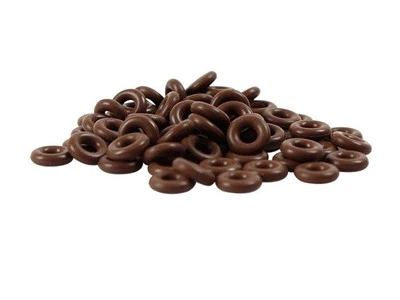
If you’re currently evaluating materials for a medical device, food processing line, or industrial component where biocompatibility is a requirement, we can work with you to develop a custom fluorosilicone formulation. We have in-house testing capabilities to verify extractables and leachables, and we partner with third-party labs to conduct full ISO 10993, FDA, and USP testing. Don’t risk using a generic fluorosilicone that’s not suited for your application—reach out to our team to discuss your project details, and we’ll guide you through every step of selecting a safe, high-performance fluorosilicone solution.
Neoprene References
- ISO 10993-1:2018, Biological evaluation of medical devices – Part 1: Evaluation and testing within a risk management process
- United States Pharmacopeia (USP) <661>, Pharmaceutical containers – Parenteral preparations
- ASTM F756-17, Standard Practice for Assessment of Hemolytic Properties of Materials
- Anderson, J. M., Rodriguez, A., & Chang, D. T. (2008). Foreign body reaction to biomaterials. Seminars in Immunopathology, 30(2), 151-166.
- 3-A Sanitary Standards, Standard Number 18-03, Flexible Tubing for Food, Dairy, and Beverage Equipment
Wuhu Chaori Rubber and Plastic Technology Co., Ltd.
As one of the most professional fluorosilicone manufacturers and suppliers in China, we have world-leading production equipment and strong manufacturing capabilities. Please feel free to wholesale bulk durable fluorosilicone made in China here and get quotation from our factory. For price consultation, contact us.
Address: Qihang Road, Xinwu Economic Development Zone, Wanzhi District, Wuhu City, Anhui Province, P.R. China
E-mail: chaori2026@163.com
WebSite: https://www.chaorirubber.com/
