If you’ve ever stood on a coastal bluff at dusk, watching ships creep toward shore guided by glowing beacons, or passed a highway overmarker light blinking high above a roadbed, you might have wondered: are those the same thing? As someone who’s spent the last decade supplying signal tower lights for ports, road construction sites, and remote industrial projects, I get this question all the time. I used to mix them up too, early on in my career—until I learned the subtle, critical differences that make each tool irreplaceable in its own lane of safety. Let’s break it down, no jargon, just real-world context from someone who sells these lights to people who actually need them. Signal Tower Light

First, let’s start with what unites them, because that’s why the confusion happens. Both signal tower lights and beacon lights are temporary or permanent warning lights designed to grab attention, usually in low light or bad weather. Both run on either mains power or solar panels (a huge selling point for remote sites where running grid power is too expensive) and come in red, amber, or white to match visibility requirements. But once you dive into their purpose, placement, operation, and design, the lines are clear—especially when you’re choosing which one to buy for your project.
Let’s talk about signal tower lights first, because that’s what I supply most of, and where the intentional mislabeling sometimes happens. A signal tower light is a directional, high-intensity light mounted on a rigid vertical tower—think 10 to 40 feet tall, depending on the use case—designed to deliver light in a specific, narrow beam, not spread evenly in all directions. That directionality is the big key here. I remember a customer a couple years back, a highway construction company in northern Wisconsin, tried to use a beacon light instead of a signal tower light to mark a temporary lane closure on a high-speed stretch of I-90. They put the beacon on a 6-foot pole right at the edge of the work zone, and halfway through the first night, cars were drifting into the closed lane. When he called me panicking, I asked him to check the beam angle. Sure enough, the beacon’s light was spreading out, so most of it was going toward the front of the approaching cars instead of down toward the lane edge where the closure was. A signal tower light, with its narrow 15- to 30-degree beam, can be tilted directly at the spot you want drivers to see—like a concrete barrier or a closed lane line—so there’s no wasted light blinding drivers or going where you don’t need it.
Signal tower lights are also built for structured, repeatable signaling, not just general warnings. The most common uses for the ones I supply include: permanent port navigation markers, where each color means a specific depth channel (green for deep water, red for shallow, white for hazards); highway work zone lane closures, where a steady red signal means “stop” and amber means “caution”; and industrial site crane operation, where flashing red lights mean a crane is lifting overhead. They’re usually mounted on rigid steel or aluminum towers that can withstand wind speeds up to 120 mph, because they’re placed in exposed areas—ports, open highways, offshore platforms—where a wobbly pole would blow over mid-storm. Another thing that sets them apart: signal tower lights often have multiple light heads on one tower. You can have a red light 20 feet up for approaching ships, an amber light 10 feet up for small boats, and a green light 5 feet up for dock workers loading cargo, all on the same 40-foot tower. That’s a efficiency thing—instead of setting up three separate poles, you get one structure that communicates multiple messages at once.
Now, beacon lights. These are omnidirectional, meaning they spread light equally in all directions, 360 degrees around the fixture. Think of a lighthouse’s top light, or the blinking light on top of a police car, or the lights on top of a cell phone tower. Their whole job is to be seen from every angle, so anyone, anywhere nearby can spot the warning. Beacons are smaller, too—most mount on a 2- to 10-foot pole, no tall rigid tower needed, and they’re built for temporary or small-scale warnings. Common uses for beacons: marking a small construction pothole on a residential street, warning of a low-hanging power line over a rural road, or alerting hikers to a steep cliff edge.
Another big difference is operation. Signal tower lights, especially for industrial and port use, often use steady or timed flashing patterns that correspond to a specific signal. For example, a port signal tower might flash green twice every 10 seconds to mean “all clear for small craft to enter the dock,” while a red signal means “do not approach.” Beacons, on the other hand, almost always use a slow, steady flash (once every 2 to 5 seconds) designed to stand out without being overly aggressive. I remember another customer, a farm equipment dealer who needed to mark a new gravel lot, tried to use a signal tower light because it was higher. The flashing pattern was so intense that customers complained it made their car headlights glare, and it was too jarring for the small, low-traffic area. A beacon, with its slower, softer flash, fit perfectly.
So why does this matter for you, the buyer? Because buying the wrong light can lead to accidents, wasted money, or even regulatory fines. I’ve had several customers over the years who’ve ordered a beacon instead of a signal tower light for a highway project, and they end up having to order a second light because the beacon’s visibility wasn’t enough at 60 mph. In the US, the Federal Highway Administration (FHWA) has specific guidelines for work zone lighting that require directional lights for lane closures—beacons don’t meet those requirements, so the customer would get a warning if they got inspected.
Let’s also get into design and durability, because that’s what I focus on as a supplier. Signal tower lights are built with weatherproof IP65 or IP67 ratings, meaning they can be submerged in water or hit by heavy rain without breaking. Their lenses are polycarbonate, scratch-resistant, and designed to cut through fog, heavy rain, or snow—we test every light we sell in a custom chamber that simulates 90 mph winds and freezing rain, so I know they hold up. Beacon lights, while durable enough for their intended uses, usually have lower IP ratings, and their omnidirectional lenses are built for close-range visibility, not long-distance. A signal tower light can be seen up to 2 miles away, while a beacon is usually visible up to a half-mile, which is plenty for small residential sites but not enough for a highway or port.
I should also address a common misconception: some people call any blinking light a beacon, but that’s not accurate. If it’s mounted on a tower, directional, and used for structured signaling, it’s a signal tower light, no matter if it blinks or stays steady. I’ve even seen airport runway lights labeled as beacons, but technically they’re signal tower lights—they’re directional, mounted on tall towers, and follow FAA signaling rules.
Now, if you’re still wondering which one you need, here’s a quick checklist I give every customer who calls me:
- Are you marking a large site (highway, port, industrial crane) where vehicles or people are moving at 30+ mph, or need a light visible from 1 mile away? Go with a signal tower light.
- Are you marking a small, low-traffic site (residential work zone, farm lot, small hazard) where visibility only needs to be a few hundred feet? A beacon will work.
- Do you need the light to communicate a specific message (shallow water vs. deep, lane closed vs. caution)? That’s a signal tower light’s job.
- Do you just need a general “don’t go here” warning? A beacon is sufficient.
As someone who’s been in this business for 10 years, I’ll tell you the biggest mistake new buyers make is choosing based on price alone. Beacons are cheaper upfront, but if you need a signal tower light, you’ll end up wasting money on a product that doesn’t meet your needs. Last year, a small town in Minnesota ordered 10 beacons for their main street road construction, and within two weeks, they had three accidents because drivers didn’t see the beacons from the main road. They had to tear out the beacons and order signal tower lights, costing them twice as much as if they’d ordered the right light the first time.
At the end of the day, safety is why we sell these lights, not just selling hardware. I don’t push a signal tower light on a customer if a beacon will work better. That’s why I’ve built a reputation over the years: I give honest advice, even if it means losing a sale temporarily, because a customer who gets the right light comes back for more.
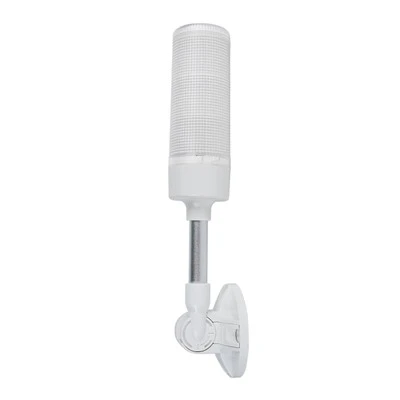
If you’re in the market for signal tower lights, whether for a highway project, port, industrial site, or anything else, I can help. We stock solar-powered and hardwired options, multiple beam angles and colors, and lights built to withstand the harshest conditions. Contact me today to discuss your project needs, and I’ll help you pick the right light to keep your site safe.
Machine Work Light References
Manual on Uniform Traffic Control Devices for Streets and Highways (MUTCD), Federal Highway Administration
International Electrotechnical Commission (IEC) 60598-2-24, Luminaires for Road and Street Lighting
American Bureau of Shipping (ABS) Rules for Building and Classing Offshore Installations
Occupational Safety and Health Administration (OSHA) Temporary Worksite Lighting Standards
Suzhou Pouge Lighting Electrical Appliance Co., Ltd.
As one of the most professional signal tower light manufacturers and suppliers in China, we also support customized service. Please feel free to wholesale advanced signal tower light made in China here and get quotation from our factory. For price consultation, contact us.
Address: Building 6-501, No.1330, Jinfeng South Road, Mudu Town, Wuzhong District, Suzhou City, China
E-mail: xduanlyy@126.com
WebSite: https://www.pouge-light.com/
