If you’ve ever wandered through a modern warehouse, you’ve probably seen that quiet, tireless workhorse gliding down the aisles: the automatic pallet forklift. It doesn’t need a human driver, and it never stops to take a break, but here’s the part that most people don’t notice: it never works alone. Every time it drops a pallet at a loading dock, avoids a loose stack of boxes, or picks up a heavy load from a high shelf, it’s talking to other equipment in the facility. As a supplier of automatic pallet forklifts, I get asked all the time how this communication actually works, and why it matters more than you might think. I want to break that down here, from the basics of how these forklifts send and receive information, to real examples of how it keeps warehouses running smoothly day in and day out. Automatic Pallet Forklift
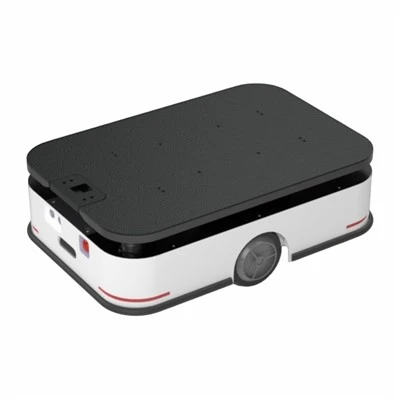
First, let’s start with the core foundation: automatic pallet forklifts don’t communicate the way people do, with words or gestures. They use industrial wireless networks built specifically for harsh warehouse environments. Unlike your home Wi-Fi, which can drop out mid-video call, these networks are designed to handle metal walls, heavy machinery, and hundreds of devices working at the same time. Most of our customers use what’s called Wi-Fi 6, or in older facilities, dedicated Industrial Wireless LAN (IWLAN) networks. These networks send small, reliable data packets between the forklift, the warehouse management system (WMS), and other equipment like conveyors, dock doors, and inventory scanners. The key here is reliability—if a forklift misses a single data packet, it could drive straight into a stack of pallets, so every message is sent twice to make sure it gets through.
Let’s take a simple example to make this concrete. Say a warehouse needs to move 20 pallets of running shoes from the storage zone to the loading dock for a shipping truck. The WMS, which is like the central brain of the entire warehouse, first sends a task to the automatic pallet forklift: “Pick up Pallet ID 1234 from Shelf 7A, bring it to Dock 3.” The forklift receives that message, confirms it, and then starts moving. But it doesn’t just follow a pre-programmed route—mid-mission, it sends a status update back to the WMS: “Approaching Shelf 7A, ready for pickup.” That update lets the WMS adjust other tasks if it needs to, like holding a pallet that’s waiting for the same forklift, or notifying the shipping team that a load is on the way.
The next layer of communication is between the forklift and its safety systems, which is where it connects to other on-floor equipment, not just the WMS. Automatic pallet forklifts use a mix of LiDAR (light detection and ranging) sensors, cameras, and short-range wireless signals to talk to things like mobile pallet jacks, pedestrian walkway beacons, and even other forklifts. For example, if a part-time worker is pushing a manual pallet jack across the aisle, that jack has a small Bluetooth or UWB (Ultra-Wideband) tag attached to it. When the forklift’s sensors pick up that tag, it sends a quick “stop” signal to its own control system, slows down, and waits until the path is clear. This is not just a nice feature—it’s required for OSHA compliance in most places, because manual pallet jacks and automatic forklifts operate in the same tight spaces, and communication is the only way to avoid accidents.
Another big piece of this puzzle is how automatic pallet forklifts connect to conveyor systems, which are the workhorses of order fulfillment lines. Let’s say a warehouse receives an online order for a single pair of shoes. The order management system pulls that order, tells a conveyor to bring the individual shoebox from the packing area to a palletizing station. Once 10 shoeboxes are on the pallet, the conveyor sends a signal to the WMS, which then sends a task to the automatic pallet forklift: “Move this full pallet from the conveyor station to outbound storage.” Once the forklift picks up the pallet, it sends a confirmation back to the conveyor, which signals it to reset for the next pallet. This back-and-forth means there’s no gap in the line—no waiting around for a forklift to show up because the conveyor doesn’t know a task is done, and no forklift trying to pick up a pallet that doesn’t exist.
Over the last five years, we’ve seen a big shift in how these forklifts communicate, with more and more customers switching to something called 5G private networks. For warehouses that need to move very large loads or have dozens of automatic forklifts working at the same time, 5G is a game-changer. It has way lower latency, which means messages are sent and received in milliseconds, not microseconds, which is critical when a forklift is moving at 5 miles an hour down a narrow aisle. One of our customers in the Midwest, a large e-commerce fulfillment center, switched to 5G last year and reported that their forklift task completion time dropped by 22% because communication was faster and more reliable. They used to have delays when multiple forklifts were all sending status updates at the same time, but 5G handles that traffic seamlessly.
I also want to talk about something that a lot of people overlook: the difference between scheduled communication and event-driven communication. Scheduled communication is when the forklift sends a status update every 10 seconds, even if nothing is changing. That’s useful for the WMS to track where all the forklifts are at any given time, so managers can see if a forklift is stuck on a task or if there’s a bottleneck in the warehouse. Event-driven communication is when the forklift only sends a message when something important happens—like when it picks up a pallet, drops off a pallet, detects an obstacle, or needs a battery charge. For example, when the forklift’s battery is at 20%, it automatically sends an event-driven message to the WMS: “Low battery, need to go to the charging station.” The WMS then assigns the next available forklift to take over its tasks, so there’s no downtime. We’ve designed our forklifts to switch between these two types of communication based on the task, which saves on network bandwidth and makes the system more efficient.
One common question we get is: what happens if communication breaks? Is the forklift just going to stop working? The short answer is no, because we build in fallback systems. Every automatic pallet forklift has on-board navigation software that stores a map of the warehouse, so it can complete basic tasks even if it loses connection to the WMS. For example, if the Wi-Fi goes out for 10 minutes, the forklift will finish the pallet pickup it’s working on, return to a safe zone, and wait until the connection comes back. Then, once it’s reconnected, it will send all the status updates it missed, so the WMS doesn’t lose track of it. This is a critical feature for warehouses that operate 24/7, because downtime can cost thousands of dollars every minute.
As a supplier, we work closely with each customer to customize the communication setup based on their specific warehouse size, number of forklifts, and type of operations. A small distribution center with 5 automatic forklifts will have a much different network setup than a 1 million square foot e-commerce fulfillment center with 50 forklifts. We don’t sell one-size-fits-all systems, because we know that every warehouse’s communication needs are unique. For example, a food and beverage warehouse, which has strict temperature controls and can’t have downtime, might prioritize 5G private networks and redundant communication paths, while a smaller retail warehouse might use a reliable IWLAN system to keep costs low without sacrificing safety.
Let me give you a real example of this in action. Last year, we worked with a customer in Texas that operates a refrigerated warehouse for frozen food. The cold environment is hard on electronics, so they needed a communication system that worked reliably in 0-degree temperatures. We installed ruggedized Wi-Fi 6 access points that are rated for extreme cold, and our automatic pallet forklifts have temperature-resistant sensors that can send and receive signals even in that environment. The forklifts communicate with temperature sensors on the pallets, too—if a pallet of ice cream is detected to be warming up, the forklift sends a message to the WMS and adjusts its route to get it to a cold storage zone faster, avoiding delays that could ruin the product. This kind of cross-equipment communication isn’t just about moving pallets—it’s about protecting the customer’s inventory.
Looking ahead, we’re seeing more and more automatic pallet forklifts communicating with something called digital twins. A digital twin is a virtual copy of the entire warehouse, including every forklift, pallet, and piece of equipment. The forklift sends real-time data back to the digital twin, so managers can see exactly how the forklift is moving, if it’s following the safest route, and even predict when it might need maintenance. For example, if a forklift’s sensor detects that it’s hitting a bump in the aisle, it sends that data to the digital twin, which can alert the maintenance team to fix the floor before it causes a breakdown. This kind of predictive communication is going to become standard in warehouses over the next few years, and we’re already integrating it into our latest forklift models.
At the end of the day, the communication between an automatic pallet forklift and other warehouse equipment is what turns a group of individual machines into a single, efficient, safe system. It’s not just about sending data—it’s about coordination. It’s about a forklift knowing when to stop for a manual pallet jack, when to hand off a load to a conveyor, when to charge its battery, and when to report a problem. As an Automatic Pallet Forklift supplier, our job isn’t just to build a good forklift—it’s to make sure that forklift can communicate seamlessly with everything else in the warehouse, so our customers can run their operations as smoothly as possible.
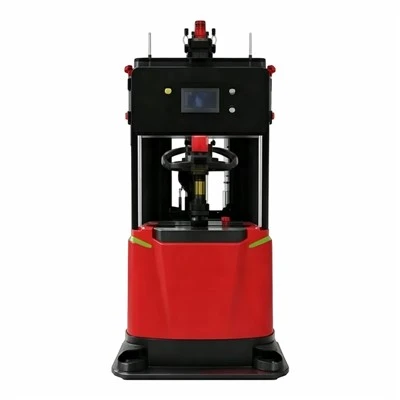
If you’re looking to upgrade your warehouse with automatic pallet forklifts and streamline your equipment communication, we’d love to talk through your needs. Connect with our team to start a procurement discussion tailored to your operations and budget.
Autonomous Mobile Robot References
Warehouse Education & Research Council (WERC). (2022). "2022 Automation Trends in Material Handling." WERC White Paper.
International Society of Automation (ISA). (2021). "Industrial Wireless Communication Standards for Warehouse Environments." ISA 100 Series Report.
Mobility Industry. (2023). "5G Private Networks in Warehouse Automation: Case Studies." Mobility Industry Magazine.
Occupational Safety and Health Administration (OSHA). (2022). "Guidelines for Automated Material Handling Equipment in Warehouses." OSHA Technical Report.
Shenzhen Ginnee Intelligent Warehousing Robotics Co., Ltd.
As one of the most professional automatic pallet forklift suppliers in China, we’re featured by quality products and low price. Please rest assured to wholesale durable automatic pallet forklift in stock here and get quotation from our factory. We also accept customized orders.
Address: Room101, No.162 JunXin Road, Niuhu Community, Guanlan Strect, Longhua District, Shenzhen, Guangdong Province, China.
E-mail: huangyongmei@szginnee.com
WebSite: https://www.ginneerobotics.com/
