Hey folks, let’s cut to the chase—if you’re in the business of road safety, you know a guardrail pile driver isn’t just another piece of heavy equipment. It’s the backbone of keeping guardrails anchored tight, so if you’re shopping for one (or just curious how it ticks), you’ve probably wondered: What’s the deal with pile driving depth? Like, how much wiggle room do we actually have here? As a supplier who’s been side-by-side with contractors, road crews, and DOT teams for years, I’ve got the real-world, no-fluff answer. Guardrail Pile Driver
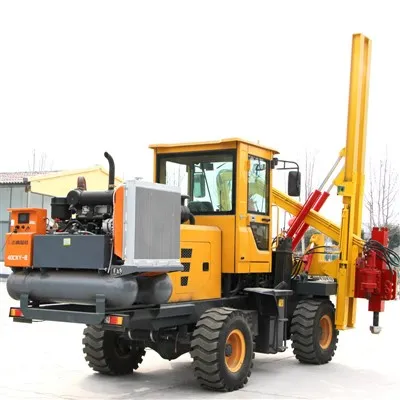
First off, let’s ground this: depth range isn’t a random number—It’s tied to three big things: the type of soil you’re working in, the guardrail system specs (think W-beam vs. box beam), and the project’s local DOT rules. Most mid-sized guardrail pile drivers (the ones you’ll see on highway job sites) don’t run on a single fixed depth. Instead, their adjustable range is usually between 3 feet and 12 feet—but wait, that’s a baseline. Let’s break down why that shifts, because that’s where the real value comes in, and where a lot of new folks get tripped up.
Let’s start with soil, the silent rule-maker. If you’re driving piles through soft, sandy loam (super common in coastal regions or areas with old fill dirt), you can’t drive them as deep without risking bending the pile. Too much depth here, and that thin steel post will buckle under the hammer’s force. For soft soils, most driver models cap out around 8 feet max, and the sweet spot where guardrail strength stays intact is 4 to 7 feet. On the flip side, rocky or compacted clay? You might not even hit full range—wait, no, actually, the better drivers have a adjuster that lets you dial back depth if the soil’s too hard. If you’re working bedrock fragments, you might only drive 3 to 5 feet, because going deeper would take way too long (and waste fuel, let’s be real). That’s where our machines stand out: we build in a depth calibration tool that’s not just a number on a screen—you can tweak it in 6-inch increments, so you’re not guessing. No more over-driving a pile in hard clay or under-driving one in sand.
Next, guardrail system type. This is non-negotiable. W-beam guardrails, the most common on U.S. highways, use 10-gauge steel posts. For these, most DOTs require a minimum depth of 4 feet, and a max of 8 feet. Wait, why? Because W-beams are designed to flex on impact—if the post is too long, it’ll stick out, tripping a car’s undercarriage in a crash. Too short, and it’ll pull out. Box-beam guardrails, used on high-traffic interstates, are thicker (8-gauge) so they need deeper anchors. Their depth range usually sits between 6 and 10 feet—so our drivers are set up to handle both, no extra attachments needed. Some folks ask if we can go deeper for bridge rail posts—yeah, we’ve got specialized attachments that push that range to 12 feet, but that’s a custom setup, not off-the-shelf. Important to note: if you go beyond the recommended depth for your guardrail, you’re wasting material (longer posts cost more) and risking instability. We always tell customers: match your depth to your beam, not the other way around.
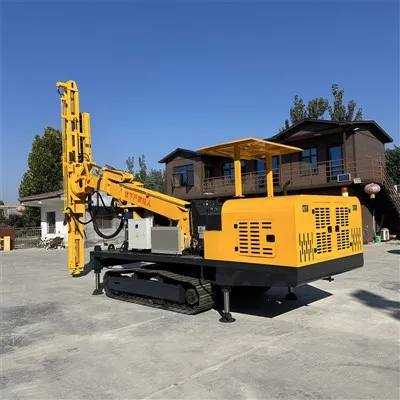
Then there’s the machine itself—because not all pile drivers are created equal. Your basic, hand-operated mini driver (used for small side roads or residential driveways) has a way smaller range—like 2 to 5 feet. Those are great for small projects, but if you’re doing a state highway, you need a tracked or truck-mounted driver. Our mid-range truck-mounted guardrail pile drivers, which are the workhorses 90% of projects use, have a standard adjustable range of 3.5 to 10.5 feet. The top-of-the-line models (the ones with auto-depth calibration and impact sensors) can adjust in real-time—like, if the hammer hits a rock and the depth stops at 5.5 feet, the machine will alert you and lock in that setting, so you don’t overwork the steel. That’s a game-changer for crews who work on multiple sites with different soil. A lot of suppliers will brag about a 2 to 12 foot range, but that’s usually for a bare machine with no attachments—add a rock auger or a different hammer, and that range shrinks. Our guys test every attachment before it hits the market, so you can trust that number on our spec sheet is what you’ll actually get on a job.
Wait, let’s talk about common mistakes we see customers make. Last year, a contractor in Florida came to us because their old driver was only driving posts 3 feet deep, and their DOT required 5 feet. He thought he needed a whole new machine—turns out, his depth adjustment pin was stuck, and the soil (soft sand) was making it feel like it wouldn’t go deeper. We walked him through calibrating the hammer’s impact force, and suddenly his range went from 2.8 to 7 feet, perfect for his W-beam job. Another crew in Texas tried to drive a box beam post 11 feet deep in hard clay—their driver’s max was 10 feet, and they broke the hammer because they forced it. That’s why matching the machine’s range to your project is key.
So, to wrap up the short answer first: For standard guardrail jobs (W-beam, soil types across most of North America), the adjustable pile driving depth range is 3 to 10.5 feet, with flexibility to tweak 6-inch increments. If you’re doing specialized work (box beams, rocky soil, bridge rails), you can push that to 12 feet with the right attachments. The only time you’ll see a smaller range is with tiny, entry-level drivers for low-intensity jobs.
Now, if you’re planning a big project—whether it’s a new highway stretch, repairing a stretch of guardrail after a storm, or a residential subdivision’s road safety upgrade—you don’t want to wing this. Get a driver that’s not just about range, but about adjustability and real-time calibration. We’ve helped hundreds of crews adjust depth mid-job when they hit a patch of unexpected soil, so you don’t have to pause for hours or deal with a broken post.
If you’re tired of guessing your pile driving depth, or you need a machine that can roll with whatever your site throws at you, hit us up to chat through your specific project. We’ll go over soil tests, guardrail specs, and help you pick the right driver (or attachments) that fits your exact range needs—no pushy sales stuff, just the real talk we’ve been giving contractors for years.
Guardrail Pile Driver References
- American Association of State Highway and Transportation Officials (AASHTO). (2021). Guide Specifications for Highway Guardrails and Bridge Railings.
- Federal Highway Administration (FHWA). (2022). Technical Brief: Guardrail Installation Practices for Soil and Rock Conditions.
- International Code Council (ICC). (2020). Standard for Road Safety Barriers and Pile Installation.
Jining Tongzhao Machinery Co., Ltd.
Jining Tongzhao Machinery Co., Ltd. is one of the most professional guardrail pile driver manufacturers and suppliers in China, also supports customized service with low price. Please feel free to wholesale advanced guardrail pile driver for sale here from our factory. Contact us for pricelist.
Address: 160 meters north of Hongxiang Road, east of Jiamei Road, Jining Economic Development Zone
E-mail: 13668674521@163.com
WebSite: https://www.cntzmachine.com/
