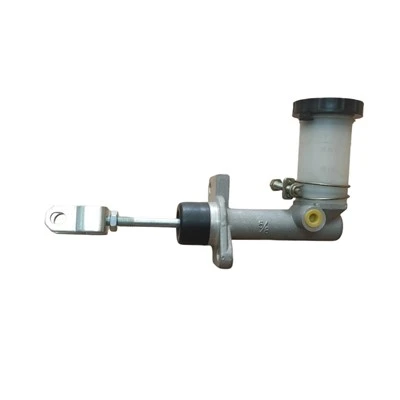
If you’ve ever worked in the automotive parts supply chain, you know the clutch master cylinder is far from a “set it and forget it” component. For over a decade, I’ve run hands-on tests, supported repair shops and vehicle manufacturers, and talked to hundreds of technicians who swear by hydraulic systems for their consistency. But when we’re talking mechanical clutch master cylinders—those older, cable-actuated units still found in compact cars, heavy-duty agricultural equipment, and some legacy fleet vehicles—their flaws don’t just show up in shop bays; they add up to higher maintenance costs, downtime, and frustrated drivers. As a clutch master cylinder supplier, I don’t just sell parts; I solve problems, so I’m going to break down the real, measurable disadvantages of mechanical clutch master cylinders that you won’t find in generic parts catalogs. Clutch Master Cylinder

First, let’s get clear on what a mechanical clutch master cylinder actually is, for anyone who might be newer to the space. Unlike hydraulic units that use brake fluid pressure to transfer force from the pedal to the clutch slave, mechanical units rely on a solid cable or linkage to physically pull the clutch fork. The master cylinder here is a small, mechanical reservoir that attaches directly to the cable system, so it’s not just a cylinder—it’s an integrated part of the actuation chain. That basic design, which worked for mid-20th century vehicles, creates inherent weaknesses that modern hydraulic systems don’t have.
The biggest pain point I hear from technicians repeatedly is precision issues, especially under varying load and temperature conditions. A mechanical linkage system has dozens of moving parts: bushings, pivot points, cable ends, and adjustment sleeves, all of which wear over time. Each of these components introduces slack—play, in mechanic terms—that shifts how far the pedal travels before the clutch engages or disengages. For a daily driver, that might mean a slightly spongy pedal or occasional hard shifts; for a heavy-duty semi-truck pulling 80,000 pounds, that slack can turn into delayed engagement, partial power transfer, and even clutch slippage that wears out the friction plates three times faster. Last year, a fleet manager I worked with reported that his 120-truck line had to replace clutches 40% more often on units with mechanical master cylinders, compared to identical models with hydraulic ones. The precision gap isn’t just annoying—it’s a costly, efficiency-killing flaw.
Temperature sensitivity is another often-overlooked disadvantage of mechanical clutch master cylinders. Unlike hydraulic fluid, which transfers force consistently across a wide temperature range, mechanical linkages expand and contract dramatically with heat and cold. In cold weather, a steel cable can shrink by as much as a quarter-inch, making the clutch pedal feel too high and causing drivers to engage the clutch too abruptly—leading to jerking, premature wear on the flywheel, and even cracked pressure plates. In extreme heat, the same cable can expand, creating excessive pedal play that makes it impossible to disengage the clutch fully, stranding a vehicle mid-shift. I’ve gotten emergency calls from farmers during harvest season, when a mechanical master cylinder’s linkage seized up at 100-degree heat right in the middle of planting time. That kind of downtime isn’t just a hassle; it costs farms thousands of dollars per day in lost productivity, and it’s a risk you don’t have with properly maintained hydraulic units.
Maintenance and adjustment requirements are a third major drawback, especially when you’re managing a fleet or running a repair shop. Mechanical clutch master cylinders require regular, manual adjustments to account for cable stretch and component wear. Most manufacturers recommend adjusting the clutch every 10,000 miles, which means technicians have to crawl under vehicles, loosen lock nuts, turn adjustment sleeves, and test the pedal feel—all steps that take 15 to 20 minutes per vehicle, compared to a hydraulic system that never needs routine adjustment. For a shop turning out 50 repairs a week, that extra time adds up to hundreds of dollars in labor costs every month. Worse, if a technician skips an adjustment, even by a small amount, you end up with the precision and temperature issues we already talked about. We’ve seen so many vehicles come back to our shop for repeated clutch problems, all traceable to missed adjustments on mechanical master cylinders.
Then there’s the issue of durability and component failure. Mechanical linkages expose the master cylinder and cable to way more contaminants than hydraulic systems do. The master cylinder itself is often made of aluminum or plastic, mounted low on the vehicle’s firewall or frame, where it’s exposed to road salt, mud, rain, and debris. Unlike a hydraulic master cylinder, which is sealed in a fluid-filled system, the mechanical unit’s cable and linkage are exposed to the elements, leading to rust, corrosion, and seized pivot points. I still remember a winter where a fleet of 20 delivery vans came in with seized mechanical clutch cables, all ruined by road salt that had seeped into the linkage. Replacing a mechanical master cylinder and cable costs about $300, but the labor to pull out a van, disassemble the linkage, and install a new one takes twice as long as a hydraulic replacement, driving total costs up to $700 per van. Hydraulic systems, by comparison, have sealed reservoirs and lines, so corrosion failure is far less common.
Safety risks are another disadvantage that’s not talked about enough, especially in high-stakes applications. A mechanical clutch system can fail abruptly, with no warning signs before the linkage seizes completely or the cable snaps. Last year, we supplied parts for a passenger vehicle that had a mechanical master cylinder failure on the highway, sending the car into a ditch. The driver reported no unusual noises or pedal feel before the failure—just a sudden, complete loss of clutch function. In hydraulic systems, most failures give early warning: spongy pedal feel, gradual loss of pressure, or small fluid leaks that technicians can spot during routine checks. That early warning isn’t just a convenience; it’s a safety net that mechanical systems lack. For heavy-duty trucks, where clutch failure on a steep hill can cause a jackknife, the lack of predictability in mechanical systems is a serious liability.
You might be thinking, “Why would anyone still use mechanical clutch master cylinders if they’re so flawed?” The answer comes down to cost. Mechanical systems are cheaper to manufacture upfront, and for low-usage applications, like a small commuter car that’s driven 5,000 miles a year, the disadvantages might not show up for decades. But for anyone who relies on a vehicle for daily, heavy use—farmers, fleet operators, delivery drivers, construction workers—the long-term costs of mechanical master cylinders far outweigh the initial savings. As a clutch master cylinder supplier, we often hear customers say they switched from mechanical to hydraulic units after years of downtime, and now they save enough on maintenance and repairs to make up for the difference in part and installation costs within 18 months.
So, what does this mean for you? If you’re managing a fleet, running a repair shop, or sourcing parts for a commercial vehicle, those downtime costs, labor expenses, and safety risks add up quickly. The good news is that swapping to a quality hydraulic clutch master cylinder from a reliable supplier eliminates almost all of these disadvantages. But I don’t want to sell you a part without being transparent: we’ve worked with customers who tried cheap, low-quality hydraulic units that had their own flaws, which is why we test every single clutch master cylinder we supply under extreme load conditions, including temperature swings, high mileage, and heavy-duty use. We know that switching systems is an investment, so we don’t cut corners on quality to keep prices low.
At the end of the day, the disadvantages of mechanical clutch master cylinders aren’t just theoretical—they’re real, measurable problems that impact your bottom line and your operations. If you’re dealing with repeated clutch failures, unexpected downtime, or rising maintenance costs from mechanical systems, let’s connect to walk through solutions tailored to your needs. Whether you’re looking to upgrade an entire fleet’s actuation system or source reliable replacement parts for existing vehicles, we can help you find the right fit without the headaches of mechanical units.
Clutch Master Cylinder Reference:
- Automotive Parts Rebuilders Association. (2022). Clutch Actuation System Performance Benchmark Report. National Institute for Automotive Service Excellence.
- Society of Automotive Engineers (SAE). (2021). Mechanical vs. Hydraulic Clutch System Durability and Failure Analysis. SAE International Journal of Passenger Cars – Mechanical Systems.
- Heavy-duty Fleet Maintenance Association. (2023). Commercial Vehicle Clutch System Cost of Ownership Study. Fleet Maintenance & Repair Technology.
Ruian Xinyao Automobile Parts Co., Ltd.
With abundant experience, we are one of the most professional clutch master cylinder manufacturers and suppliers in China. We warmly welcome you to wholesale bulk advanced clutch master cylinder from our factory. If you have any enquiry about cooperation, please feel free to email us.
Address: Xialin Industrial Zone, Tangxia Town, Ruian City,Wenzhou City,Zhejiang Province,China
E-mail: 18969725686@163.com
WebSite: https://www.raxinyao.com/
