In the realm of industrial water treatment, Reverse Osmosis (RO) and RO – EDI (Reverse Osmosis – Electrodeionization) hybrid systems stand out as two prominent technologies. As an industrial RO equipment supplier, I’ve witnessed firsthand the diverse needs of industries and the pivotal role these systems play in meeting those requirements. This blog aims to delve into the differences between RO and RO – EDI hybrid systems, shedding light on their unique features, applications, and benefits. Industrial RO Equipment
1. Basic Principles
RO Systems
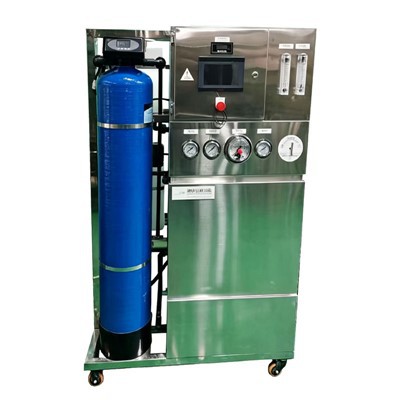
Reverse Osmosis is a membrane – based filtration process that uses a semi – permeable membrane to remove dissolved solids, organic compounds, and other contaminants from water. The process works by applying pressure to the feed water, forcing it through the membrane while leaving behind the impurities. The membrane has tiny pores that allow water molecules to pass through but block larger molecules and ions.
For example, in a typical industrial RO system, the feed water first goes through pre – treatment steps such as sediment filtration and activated carbon filtration to remove large particles and organic matter. Then, it enters the RO unit where the high – pressure pump forces the water through the RO membrane. The purified water, known as permeate, is collected on one side of the membrane, while the concentrated solution containing the rejected contaminants, called brine, is discharged.
RO – EDI Hybrid Systems
An RO – EDI hybrid system combines the RO process with Electrodeionization. After the water has been pre – treated and passed through the RO unit, it enters the EDI module. EDI is a continuous, chemical – free process that uses an electric current to remove ions from water. Inside the EDI module, ion – exchange resins are used to capture and remove ions. The electric current then regenerates the resins, allowing for continuous operation without the need for chemical regeneration.
This combination of RO and EDI takes advantage of the RO’s ability to remove a large portion of the contaminants and the EDI’s ability to polish the water to an even higher purity level.
2. Water Purity
RO Systems
RO systems are highly effective at removing a wide range of contaminants, including salts, heavy metals, and most organic compounds. They can typically achieve a rejection rate of up to 95 – 99% for dissolved solids. The purity of the permeate produced by an RO system depends on several factors, such as the quality of the feed water, the type and condition of the RO membrane, and the operating pressure.
In many industrial applications, RO – treated water is sufficient for processes such as boiler feed water, cooling tower make – up water, and general industrial cleaning. However, for applications that require extremely high – purity water, such as semiconductor manufacturing, pharmaceutical production, and power generation in nuclear plants, the water quality from an RO system alone may not meet the requirements.
RO – EDI Hybrid Systems
RO – EDI hybrid systems are capable of producing water with much higher purity levels compared to RO systems alone. The EDI module further removes the remaining ions in the RO – treated water, reducing the conductivity to very low levels. In fact, RO – EDI systems can produce water with a resistivity of up to 18.2 MΩ·cm, which is close to the theoretical limit of pure water.
This high – purity water is essential for industries where even the slightest presence of contaminants can have a significant impact on product quality or process efficiency. For instance, in the semiconductor industry, the production of microchips requires water of the highest purity to prevent defects and ensure the proper functioning of the electronic components.
3. Operational and Maintenance Requirements
RO Systems
RO systems require regular maintenance to ensure optimal performance. The pre – treatment components, such as sediment filters and activated carbon filters, need to be replaced periodically to prevent fouling of the RO membrane. The RO membrane itself also needs to be cleaned regularly to remove any accumulated contaminants. This may involve chemical cleaning using specialized cleaning agents.
In addition, the RO system consumes a significant amount of energy, mainly due to the high – pressure pump required to force the water through the membrane. The brine discharge from the RO system also needs to be properly managed to comply with environmental regulations.
RO – EDI Hybrid Systems
While RO – EDI hybrid systems also require pre – treatment and membrane maintenance similar to RO systems, the EDI module has its own set of operational requirements. The EDI module needs to be monitored for proper electrical current and voltage to ensure efficient ion removal. However, one of the major advantages of EDI is that it does not require chemical regeneration like traditional ion – exchange systems. This reduces the cost and environmental impact associated with chemical handling and disposal.
The overall energy consumption of an RO – EDI hybrid system is relatively lower compared to a traditional ion – exchange system with RO pre – treatment, as the EDI process is more energy – efficient.
4. Cost Considerations
RO Systems
The initial cost of an RO system depends on the size and capacity of the system, as well as the quality of the components. Generally, RO systems are more cost – effective for applications that do not require extremely high – purity water. The operating cost mainly includes energy consumption, replacement of pre – treatment filters, and membrane cleaning and replacement.
For smaller industrial applications, the capital investment in an RO system is relatively lower, making it a popular choice for many businesses. However, in the long run, the cost of membrane replacement and energy consumption can add up.
RO – EDI Hybrid Systems
RO – EDI hybrid systems have a higher initial cost compared to RO systems due to the addition of the EDI module. However, they offer long – term cost savings in terms of reduced chemical usage and lower energy consumption compared to traditional ion – exchange systems.
In industries where high – purity water is a necessity, the benefits of an RO – EDI hybrid system often outweigh the higher initial investment. The consistent production of high – quality water can lead to improved product quality, reduced downtime, and lower overall operating costs.
5. Applications
RO Systems
RO systems are widely used in various industries for a range of applications. In the food and beverage industry, RO is used for water purification in the production of bottled water, soft drinks, and beer. In the textile industry, RO – treated water is used for dyeing and finishing processes to prevent the formation of stains and improve the quality of the final product.
In the power generation industry, RO systems are used to produce boiler feed water, which helps to prevent scale formation and corrosion in the boilers, thereby improving the efficiency and lifespan of the equipment.
RO – EDI Hybrid Systems
RO – EDI hybrid systems are mainly used in industries that demand ultra – high – purity water. In the pharmaceutical industry, they are used for the production of injectable drugs, where the water quality must meet strict regulatory standards. In the electronics industry, RO – EDI systems are used for wafer cleaning and semiconductor manufacturing to ensure the reliability and performance of the electronic devices.
In the laboratory and research sector, RO – EDI hybrid systems are used to provide high – purity water for experiments and analytical instruments.
Conclusion
In summary, both RO and RO – EDI hybrid systems have their own advantages and are suitable for different industrial applications. RO systems are a cost – effective solution for many general industrial water treatment needs, offering a high level of contaminant removal. On the other hand, RO – EDI hybrid systems are designed for industries that require ultra – high – purity water, providing a more advanced and efficient way to produce water of the highest quality.
Membrane Filtration Equipment As an industrial RO equipment supplier, I understand the importance of choosing the right water treatment system for your specific needs. Whether you are looking for a basic RO system or a more sophisticated RO – EDI hybrid system, I can provide you with the expertise and high – quality equipment to meet your requirements. If you are interested in learning more about our products or discussing your water treatment needs, please feel free to contact us. We are committed to helping you find the best solution for your industrial water treatment challenges.
References
- Cheryan, M. (1998). Ultrafiltration and Microfiltration Handbook. Technomic Publishing.
- Belfort, G., Davis, R. H., & Zydney, A. L. (1994). The behavior of suspensions and macromolecular solutions in crossflow microfiltration. Journal of Membrane Science, 96(1 – 2), 1 – 58.
- Ognier, S., Cabassud, C., & Aouni, M. (2006). Electrodeionization: a critical technology overview. Separation and Purification Technology, 51(1), 1 – 22.
Shandong Yanuo Environmental Protection Equipment Co., Ltd.
We’re well-known as one of the leading industrial ro equipment manufacturers and suppliers in China, featured by quality products and good price. Please rest assured to buy bulk industrial ro equipment made in China here from our factory. Customized orders are welcome.
Address: North Side of the Road, 1,000 Meters West of the Intersection of Fenghuangshan West Road and Provincial Highway S102, Wangfu Subdistrict, Qingzhou City, Weifang City, Shandong Province.
E-mail: ynhb.499973983@gmail.com
WebSite: https://www.zkyaruo.com/
